
Allen's Hummingbird Nest - Spring 2026 3rd Clutch
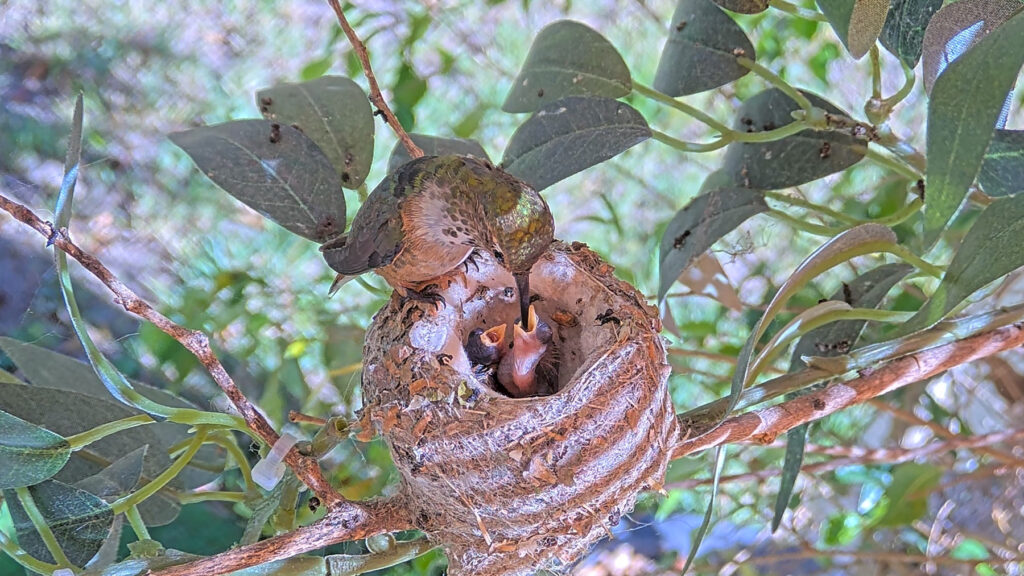
An Allen's Hummingbird nest from Oceanside California Lily's Second Clutch Spring 2026
This HD camera streams live 24/7 with sound, so make sure you turn up your volume. You can also watch the nest at night thanks to the wonders of infrared technology, approved by The Cornell Lab of Ornithology.
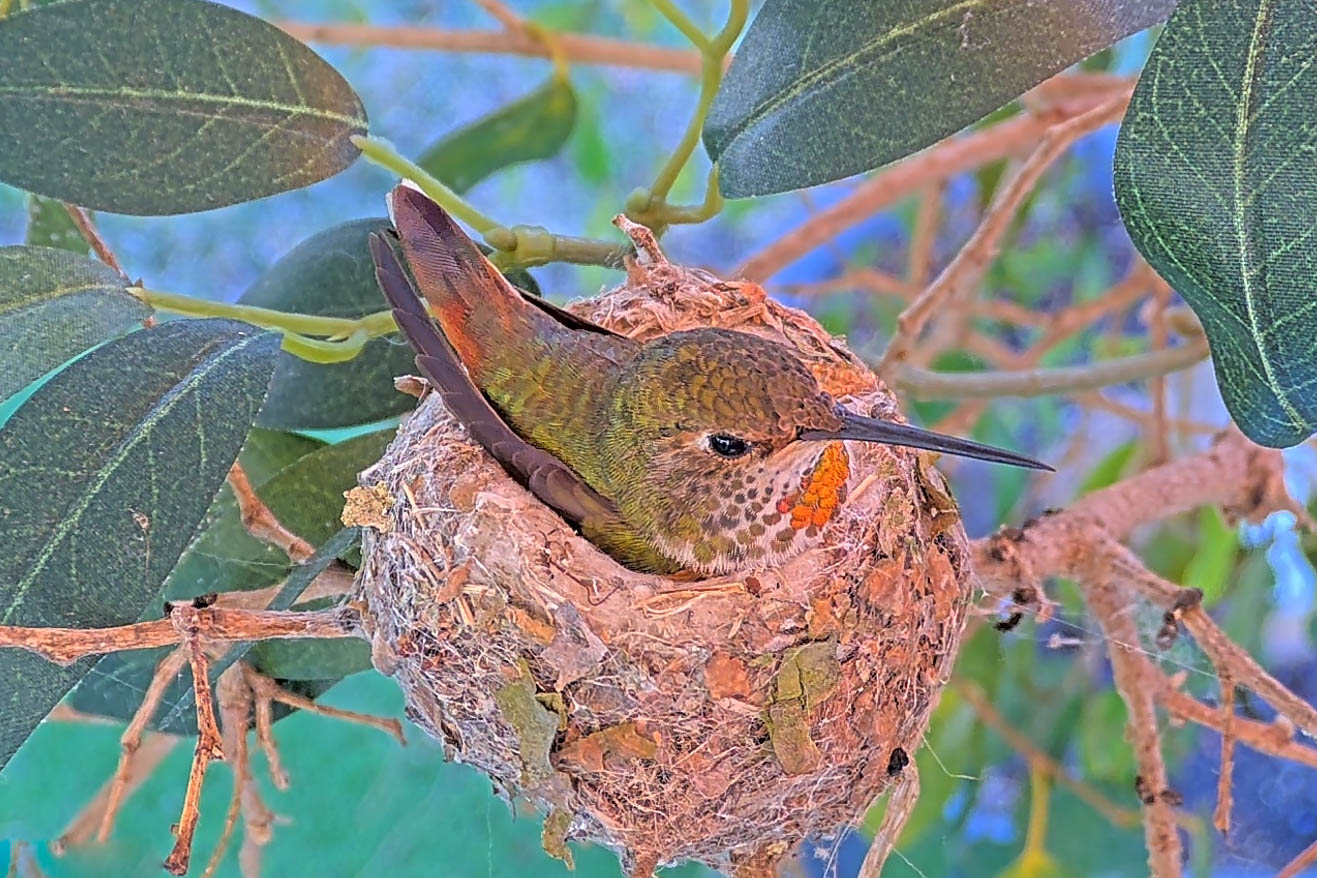
This season features Lily, our beautiful year-round resident female Allen’s Hummingbird, and her second clutch of the 2026 season.
Watch as Lily caringly raises her chicks from egg to fledge.
Key Events for Spring 2026 Clutch 2
 March 26, 2026 - Lily starts nestorations
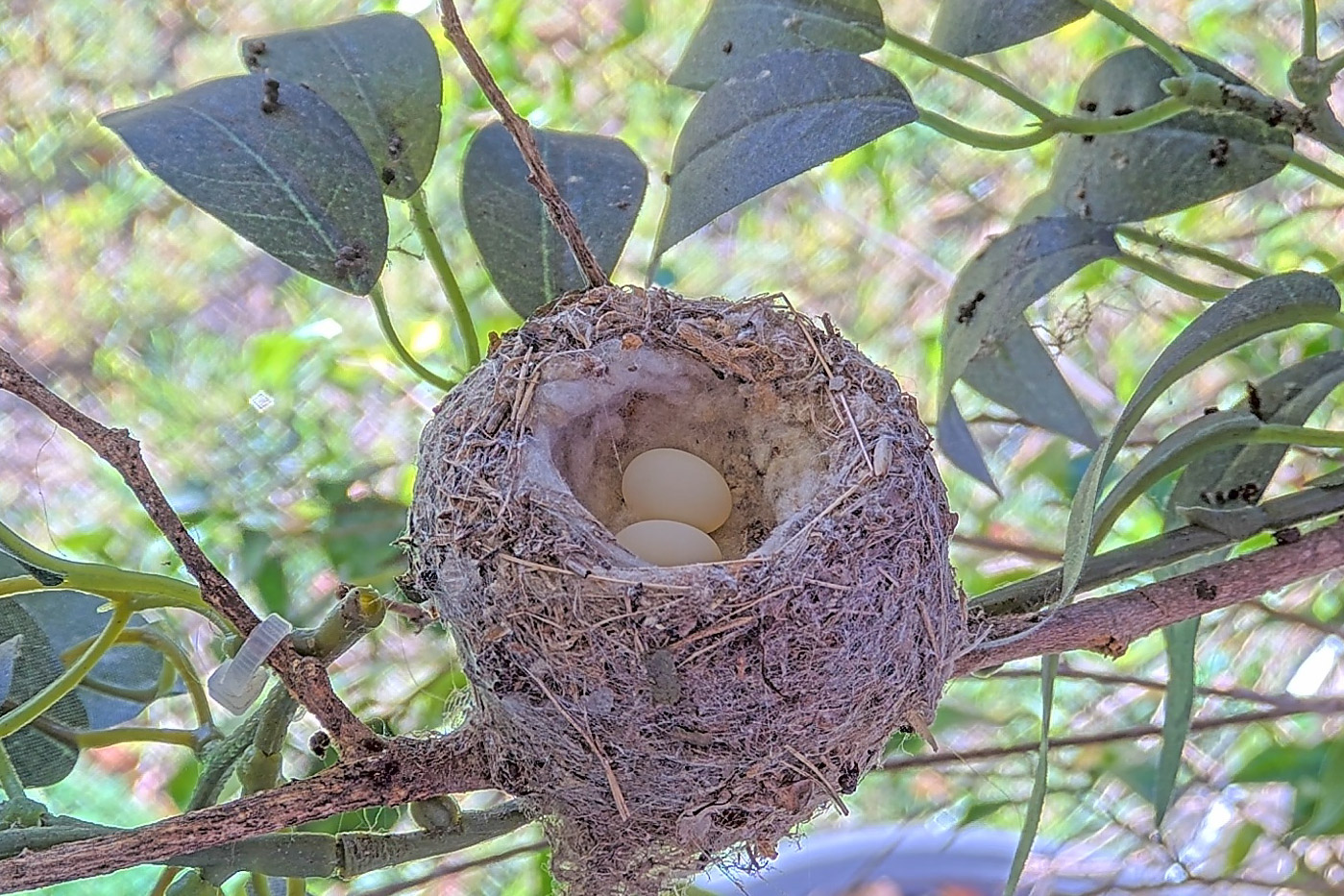
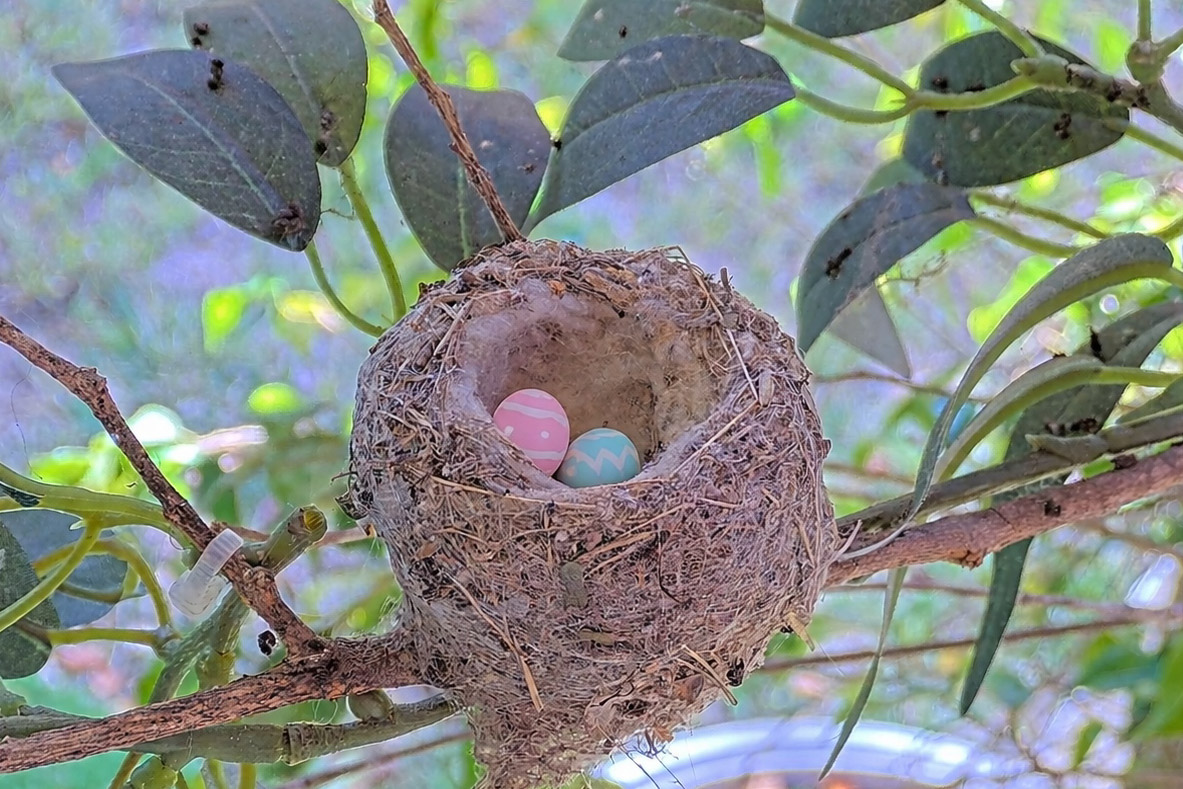
- April 2, 2026 - First egg laid 7:45 AM
- April 4, 2026 - Second egg laid 7:23 AM
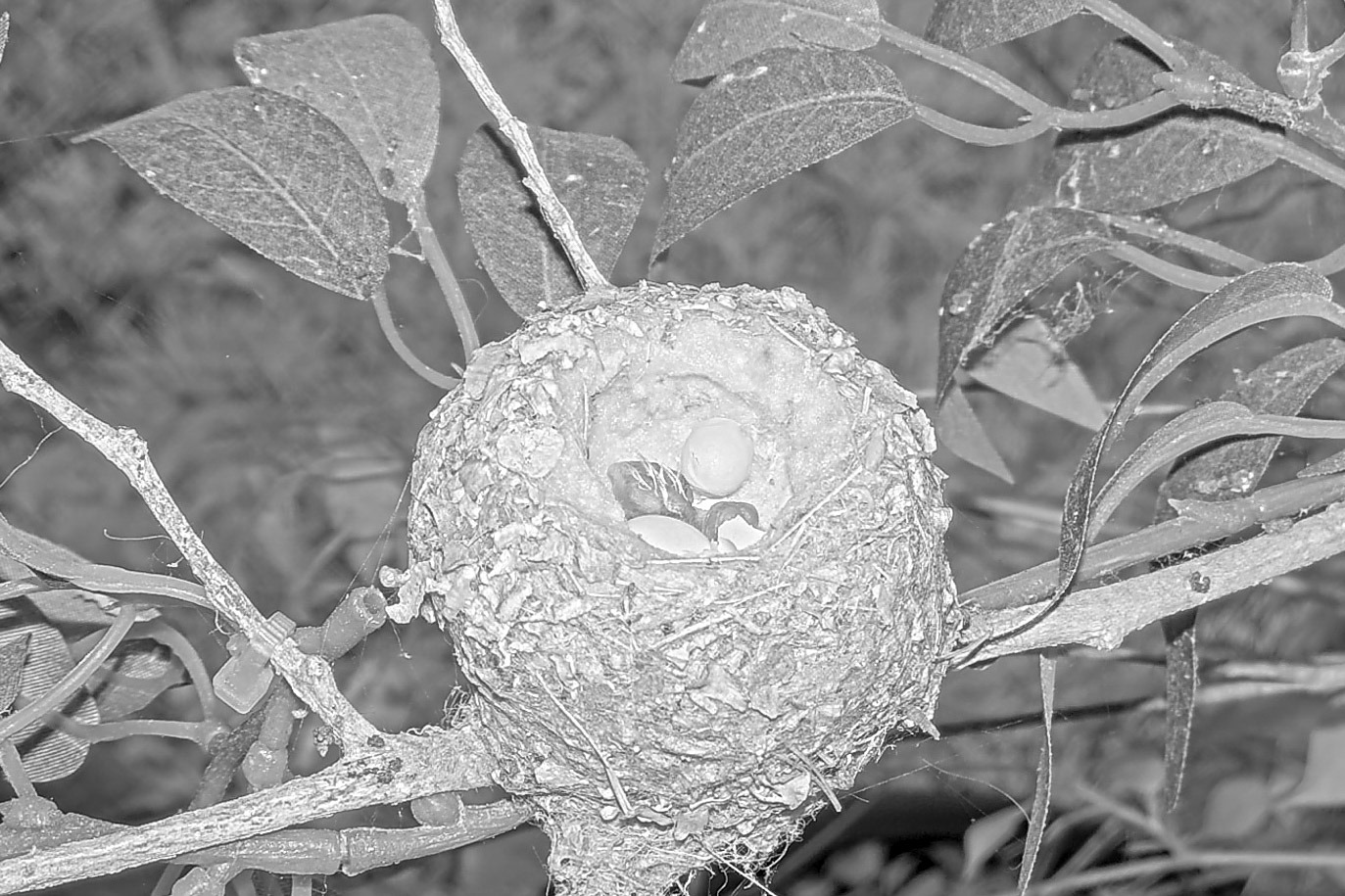
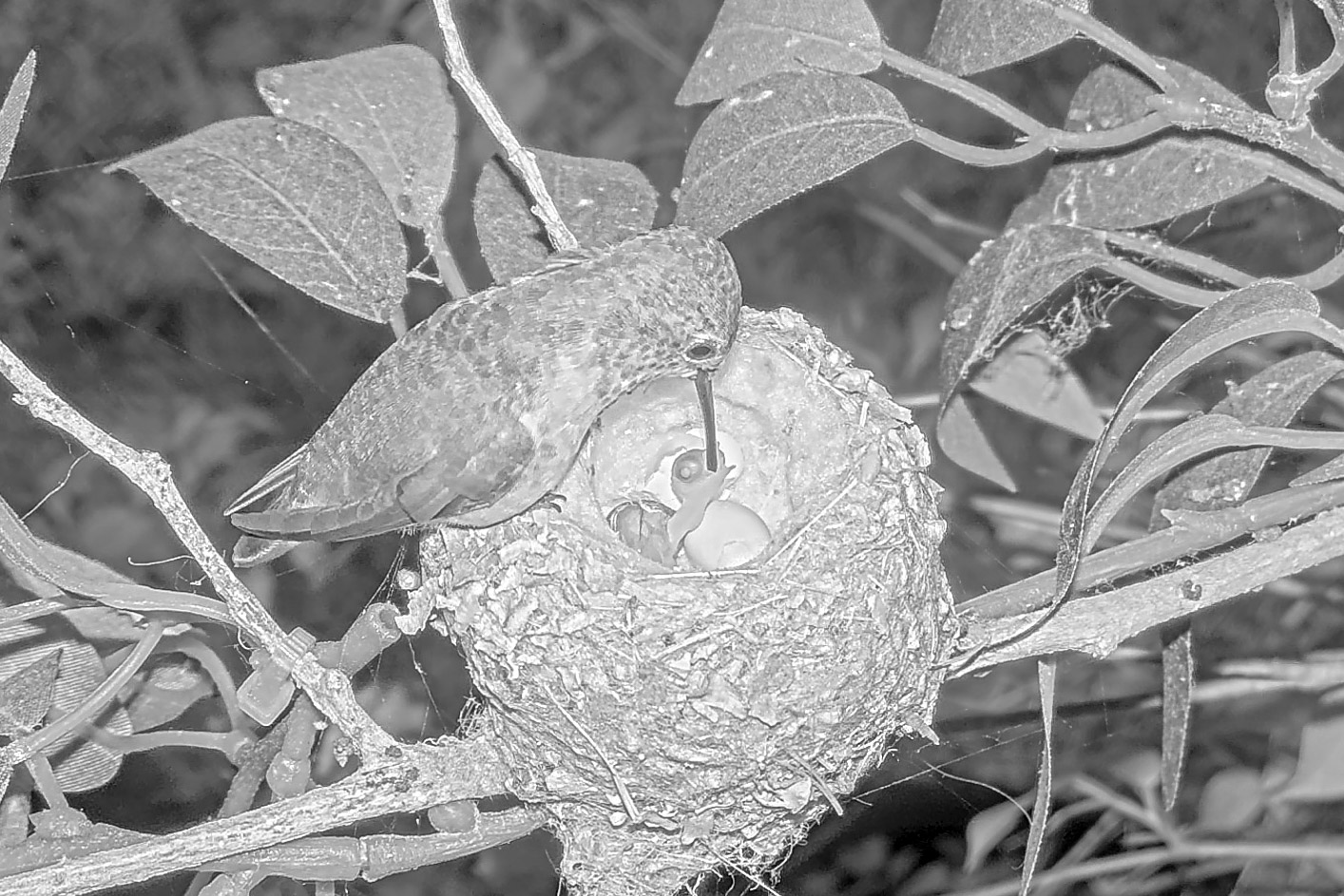
- April 19, 2026 - 5:59 AM First chick hatches
- April 20, 2026 - 5:58 AM Second chick hatches
- 🥳 April 22, 2026 - Chicks named Tulip and Poppy
- April 30, 2026 - Chicks first night alone on the nest
- 🐛 May 7, 2026 - Chicks have mites and leave for rehab
 March 26, 2026 - Lily starts nestorations
 April 2, 2026 - First egg laid 7:45 AM
 April 19, 2026 - 5:59 AM First chick hatches
 April 30, 2026 - Chicks first night alone on the nest
📺 Visit our YouTube Channel for Live Streams and Hundreds of Videos: https://youtube.com/@alyssasnaturesanctuary
Links to past clutches:
2014 - 2018 - 2019 - 2020 - 2021 - 2023 1st Clutch - 2023 2nd Clutch - 2023 3rd Clutch - 2024 1st Clutch
2024 2nd Clutch - 2024 3rd Clutch - 2024 4th Clutch - 2025 1st Clutch - 2025 2nd Clutch - 2025 3rd Clutch
2025 4th Clutch - 2026 1st Clutch - 2026 2nd Clutch - 2026 3rd Clutch
CLICK ON PICTURES TO ENLARGE
Clutch Scrapbook: Beginning to End
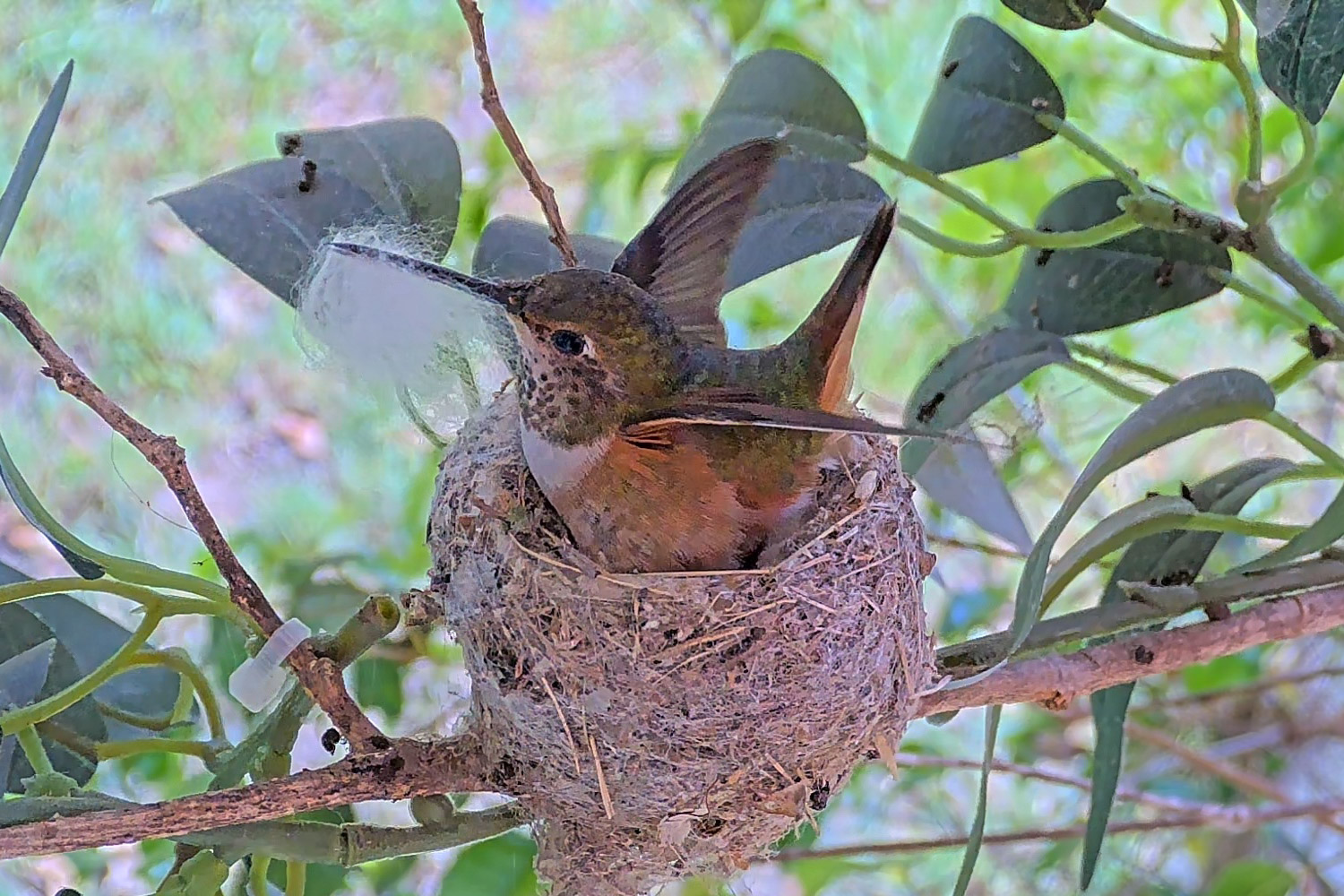
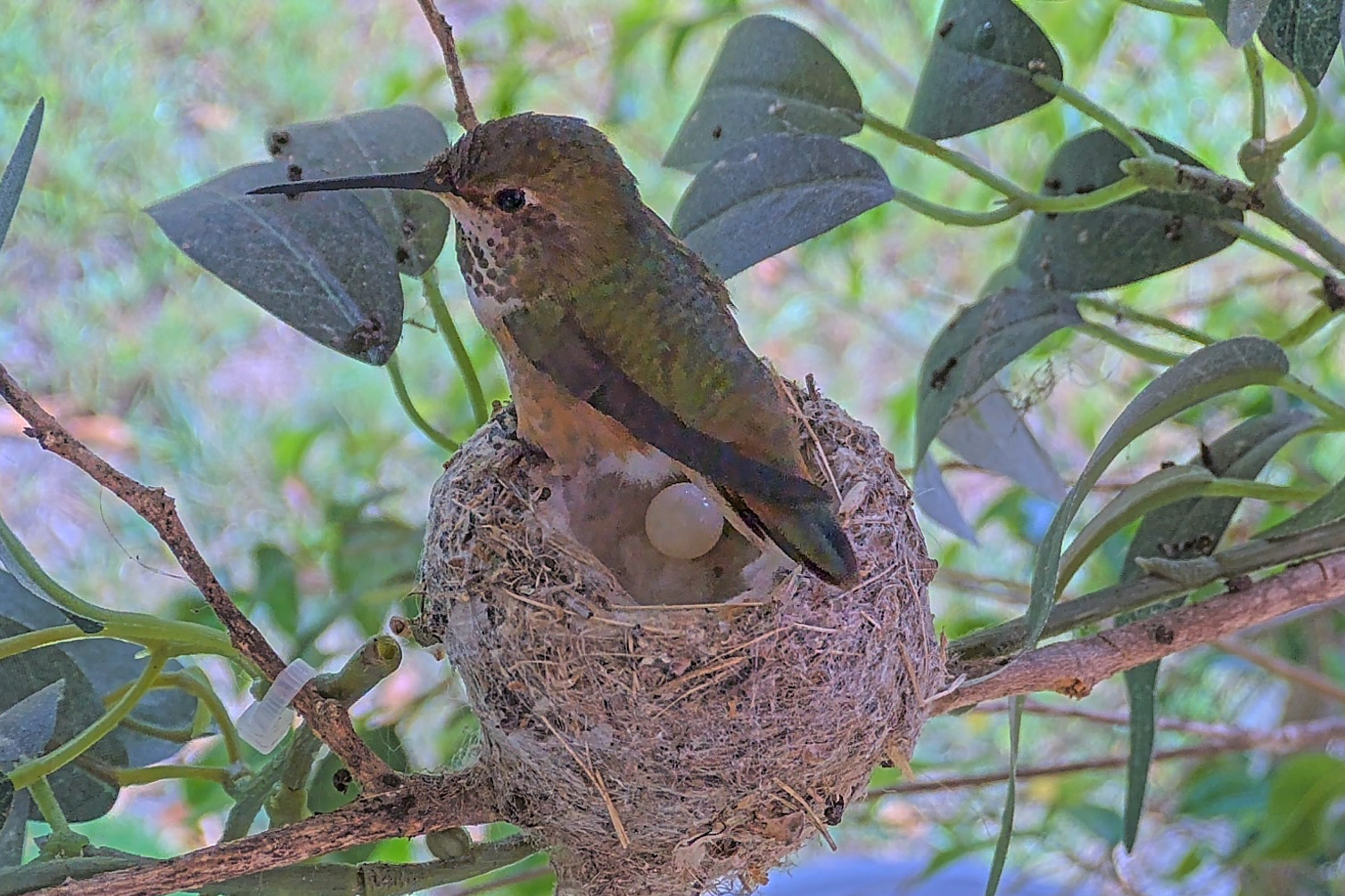
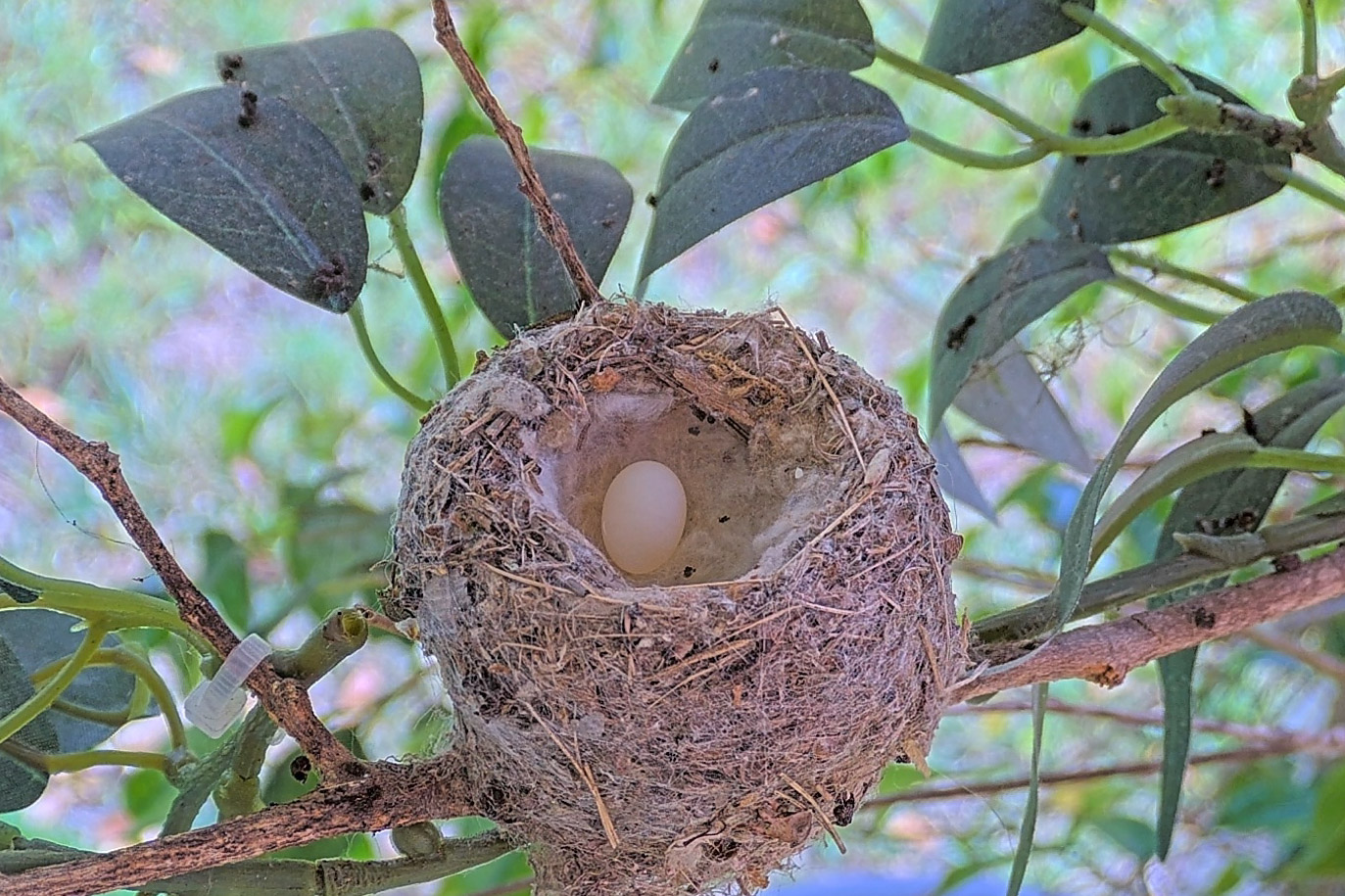
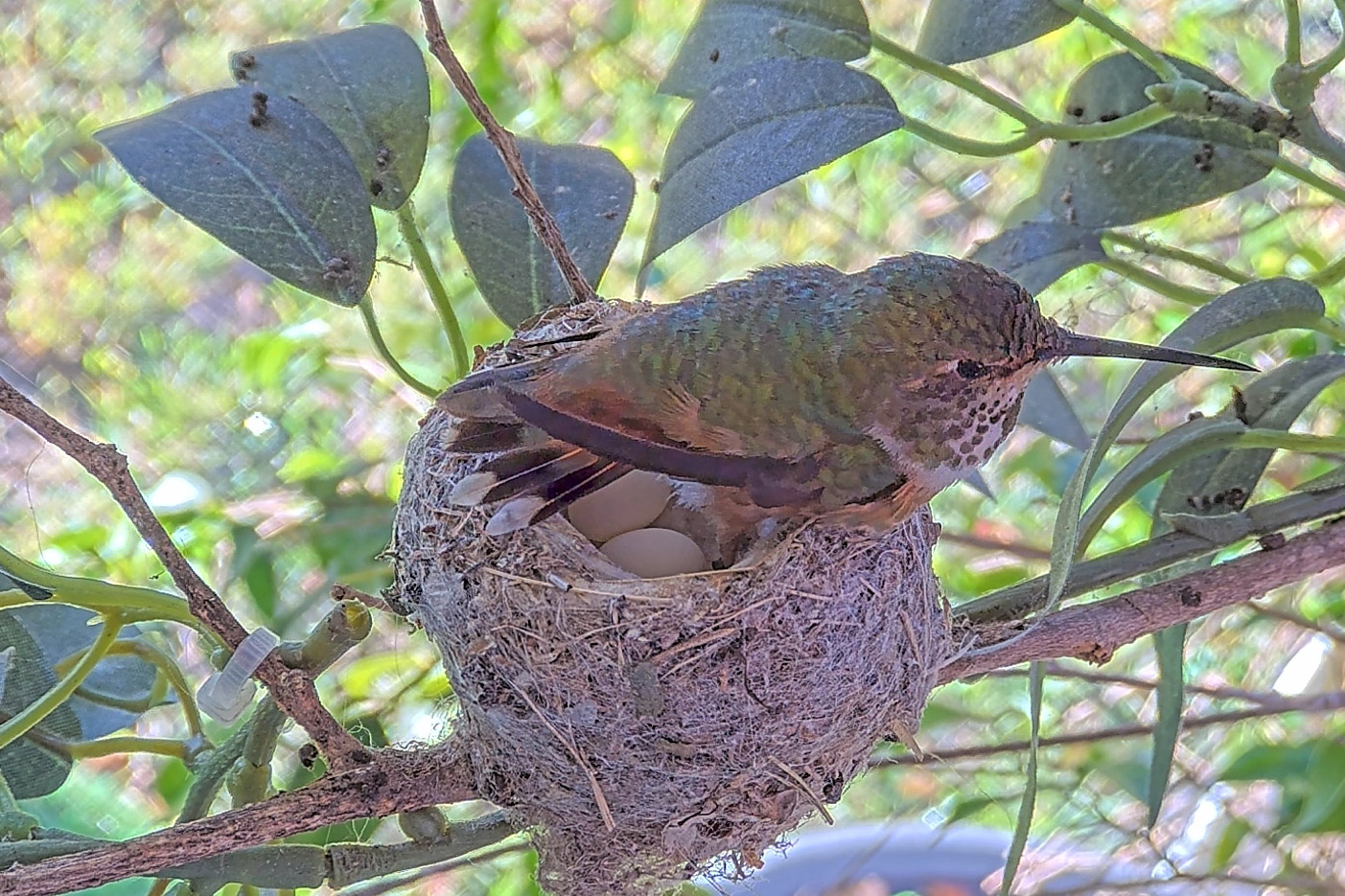
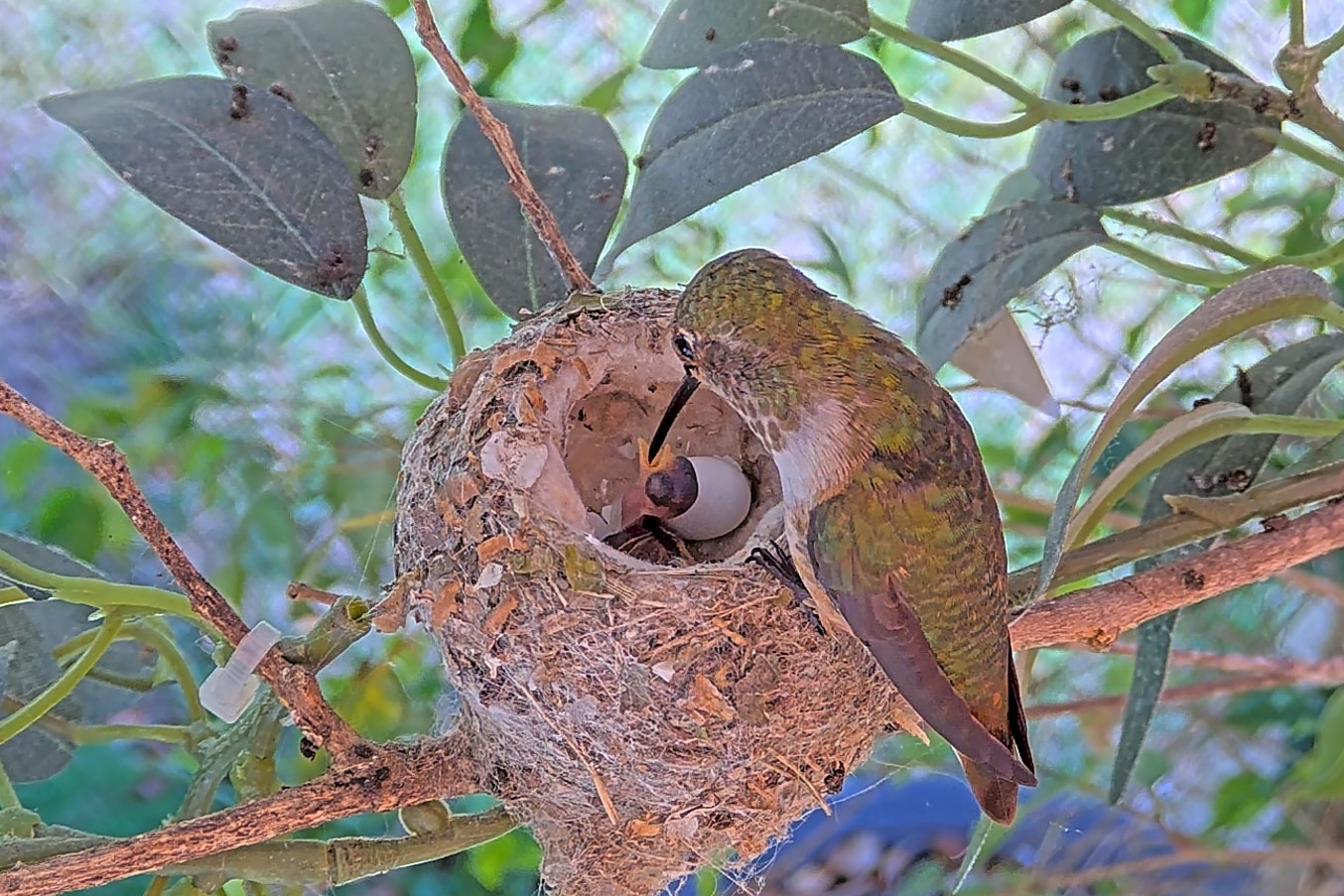
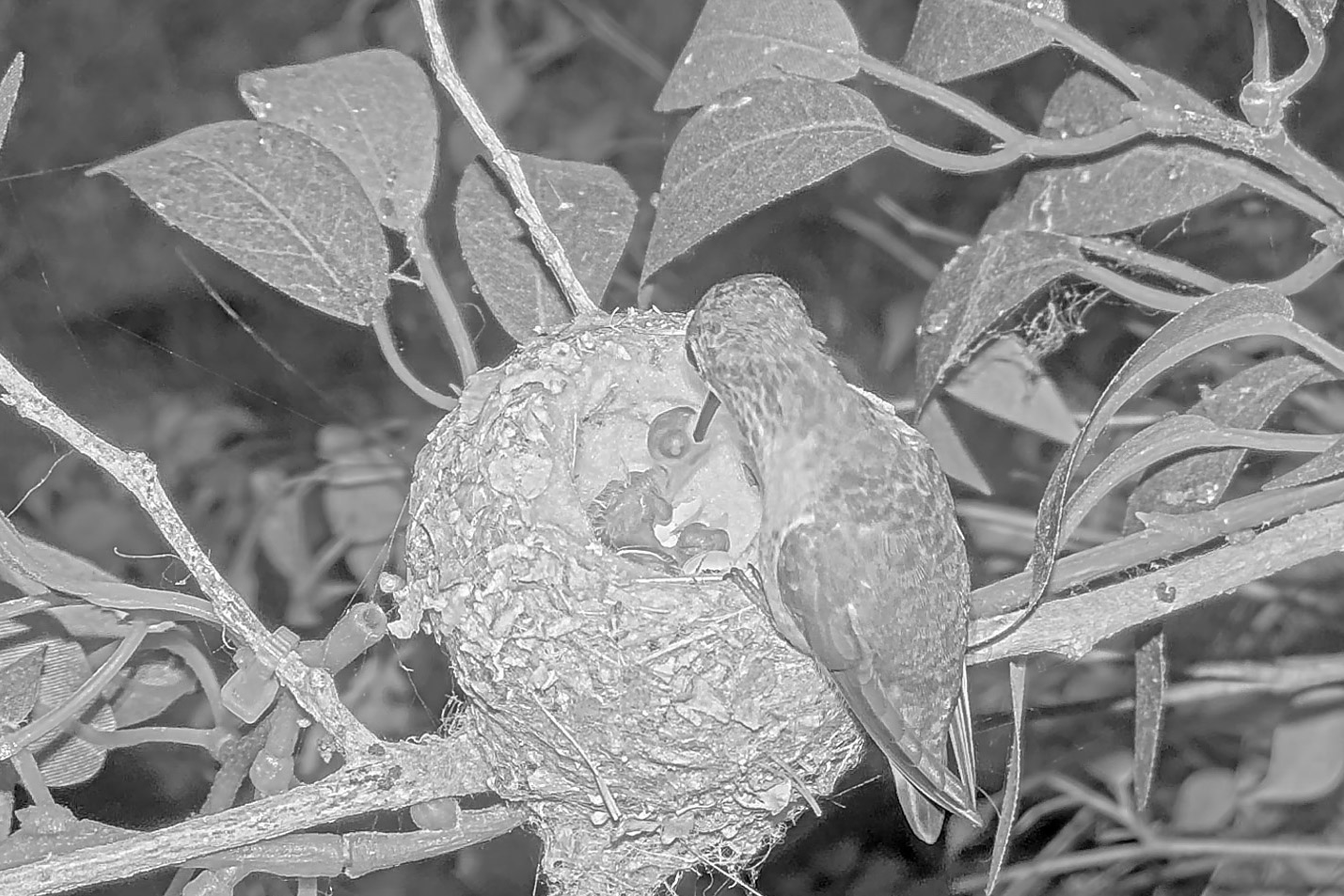
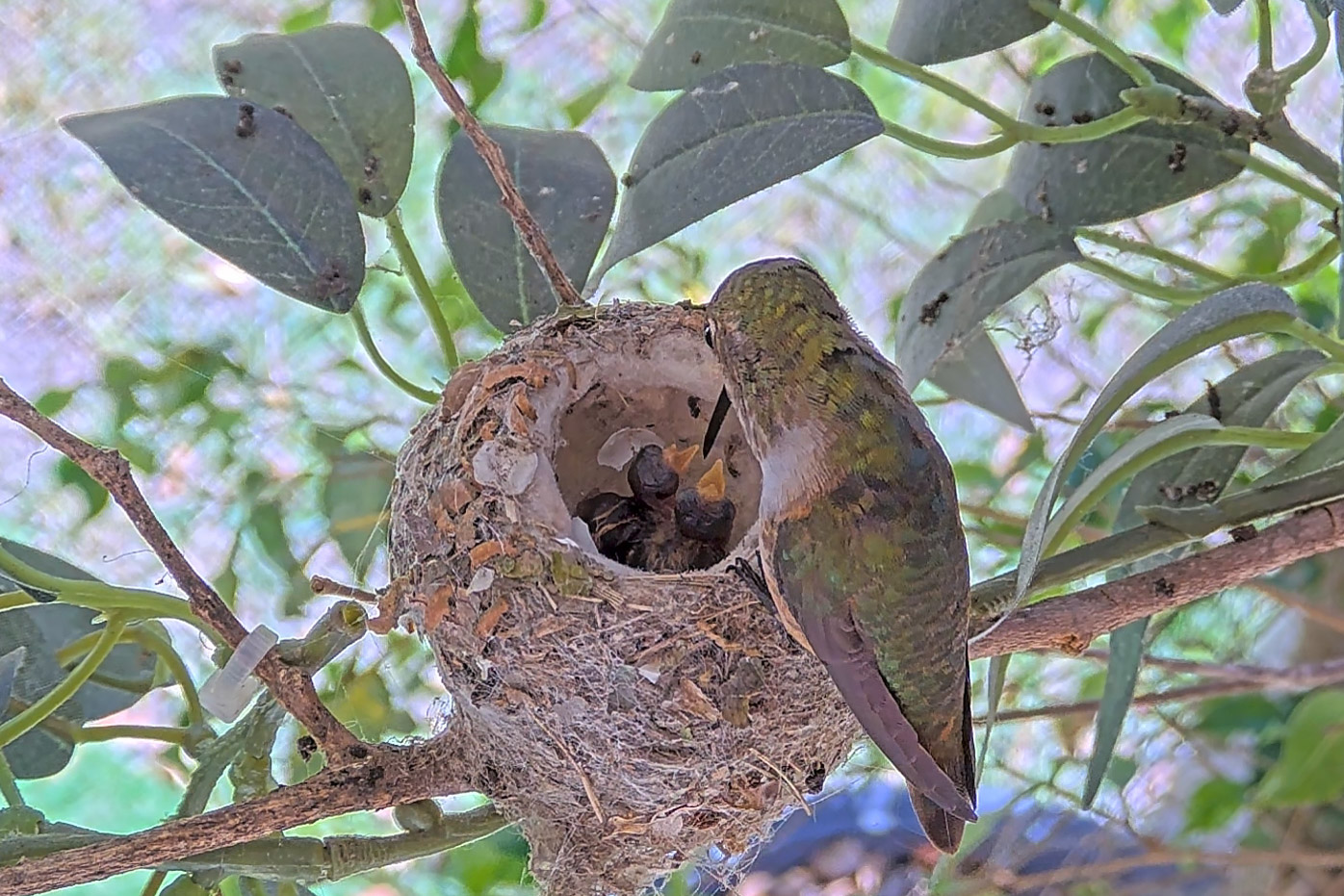
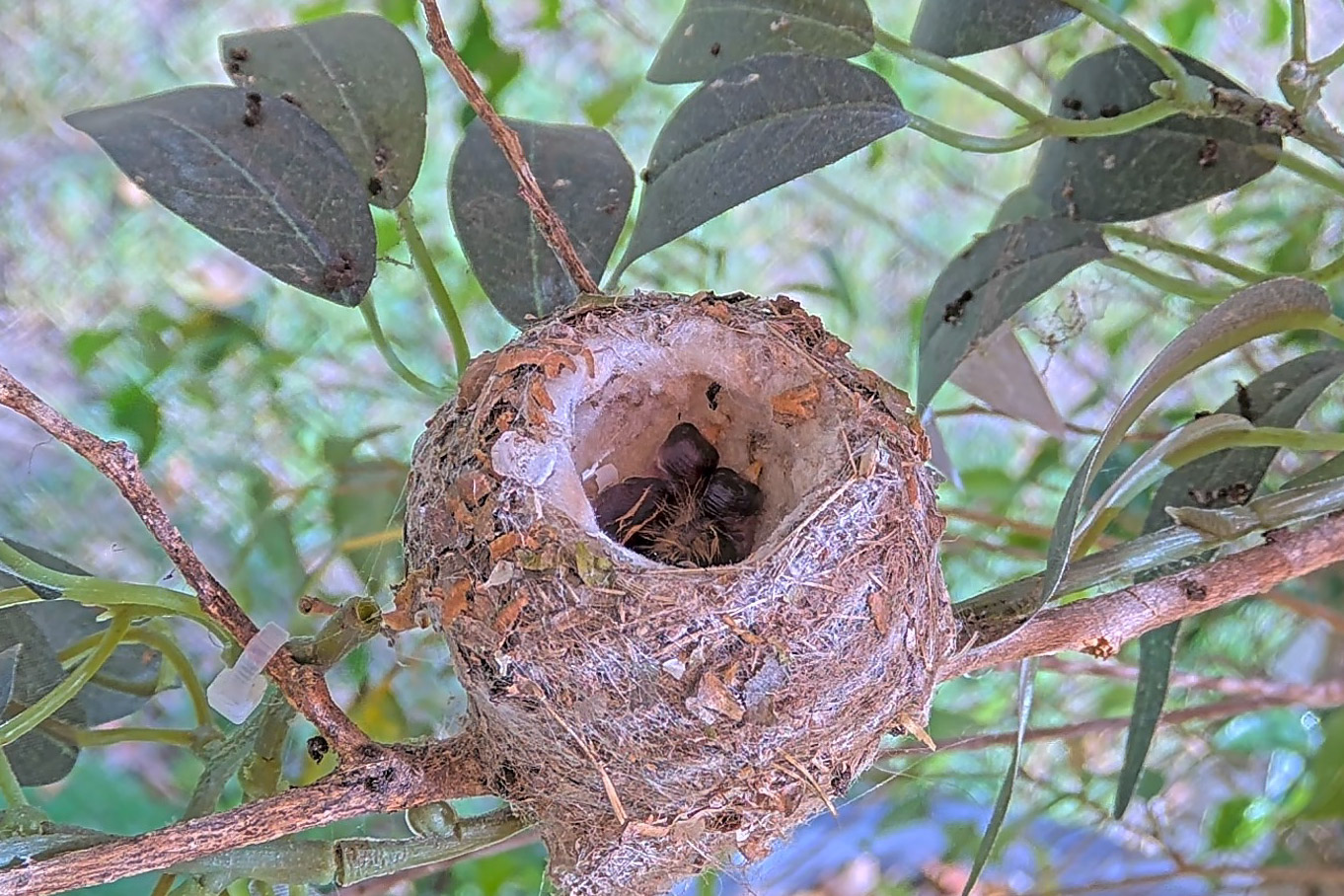
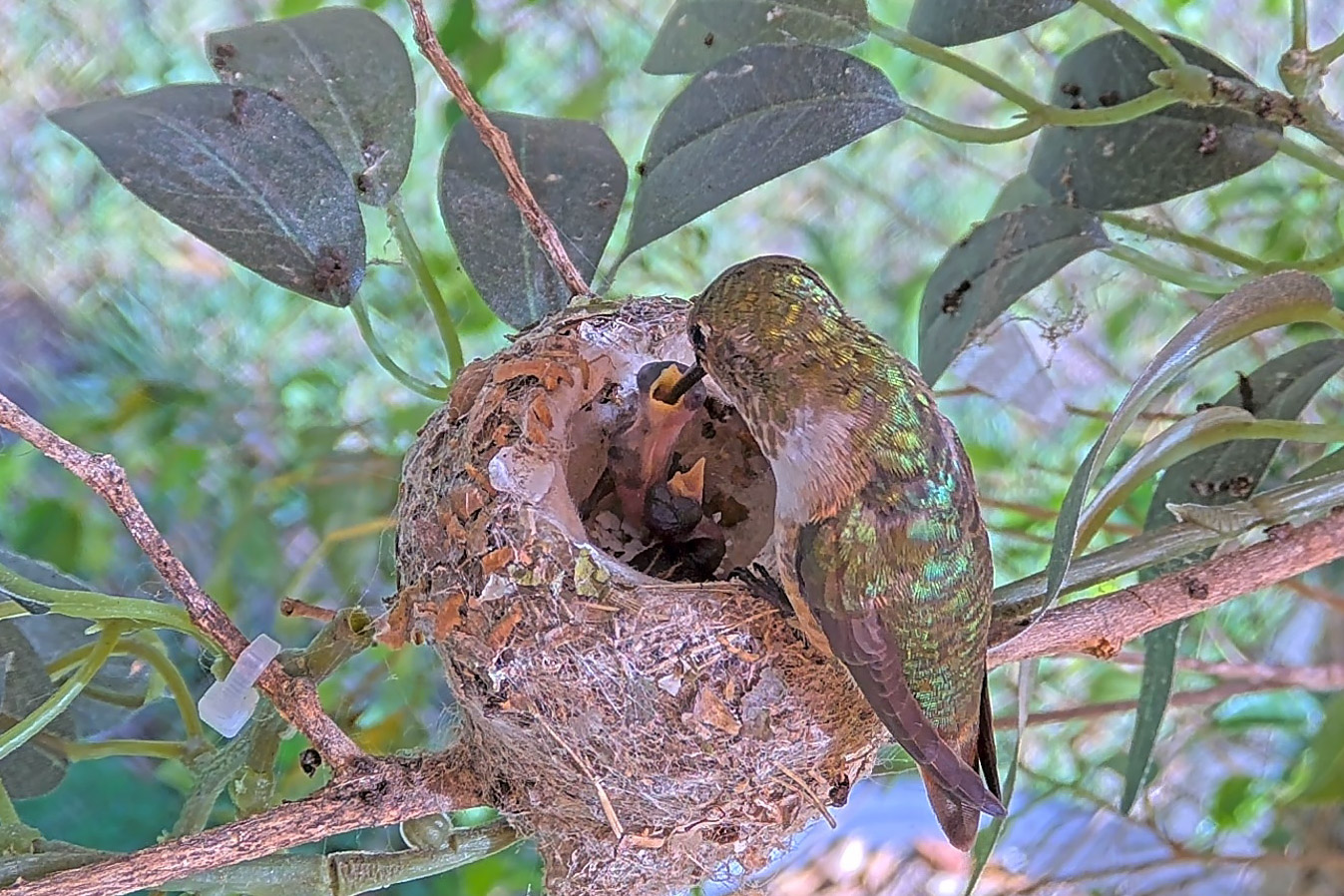
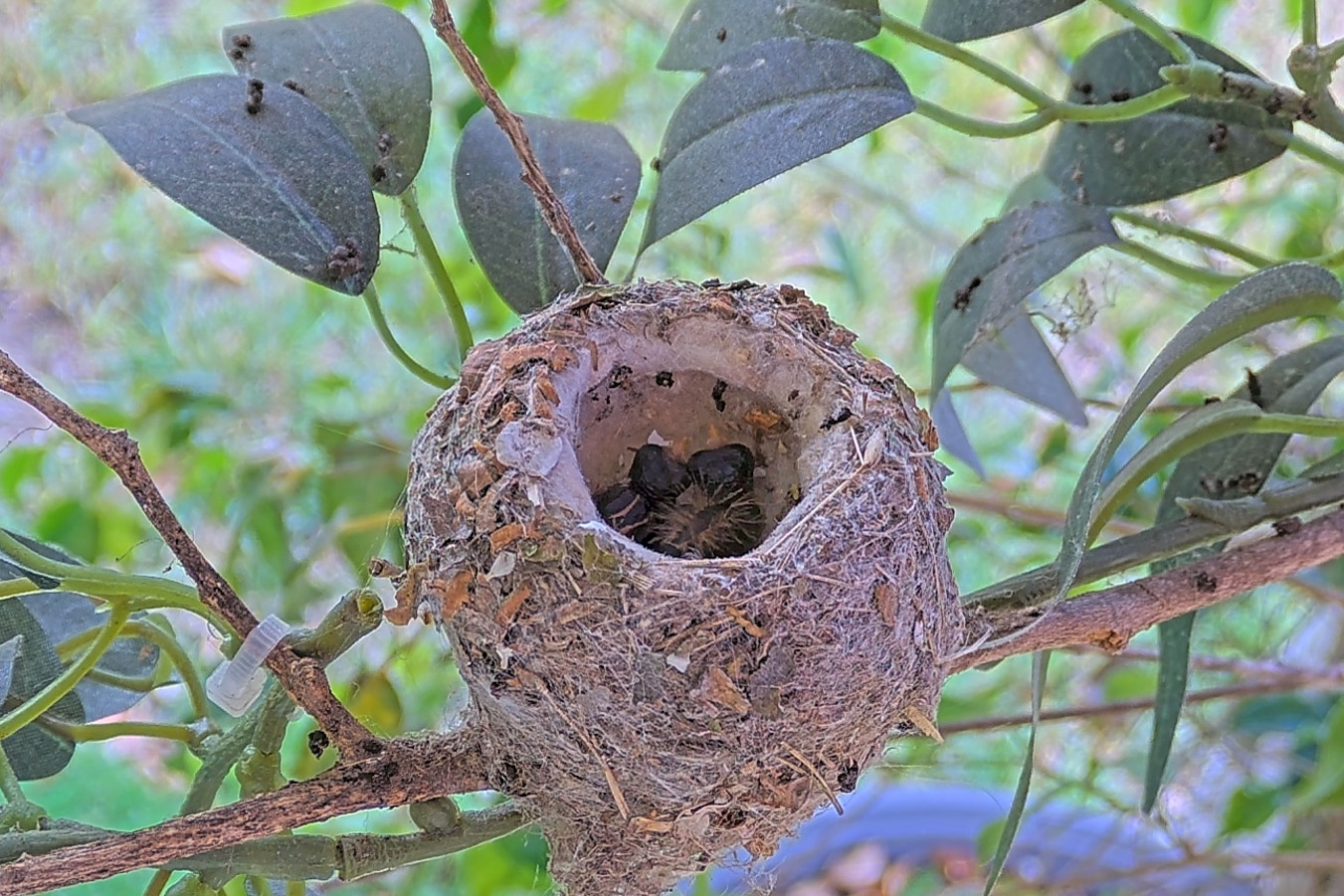
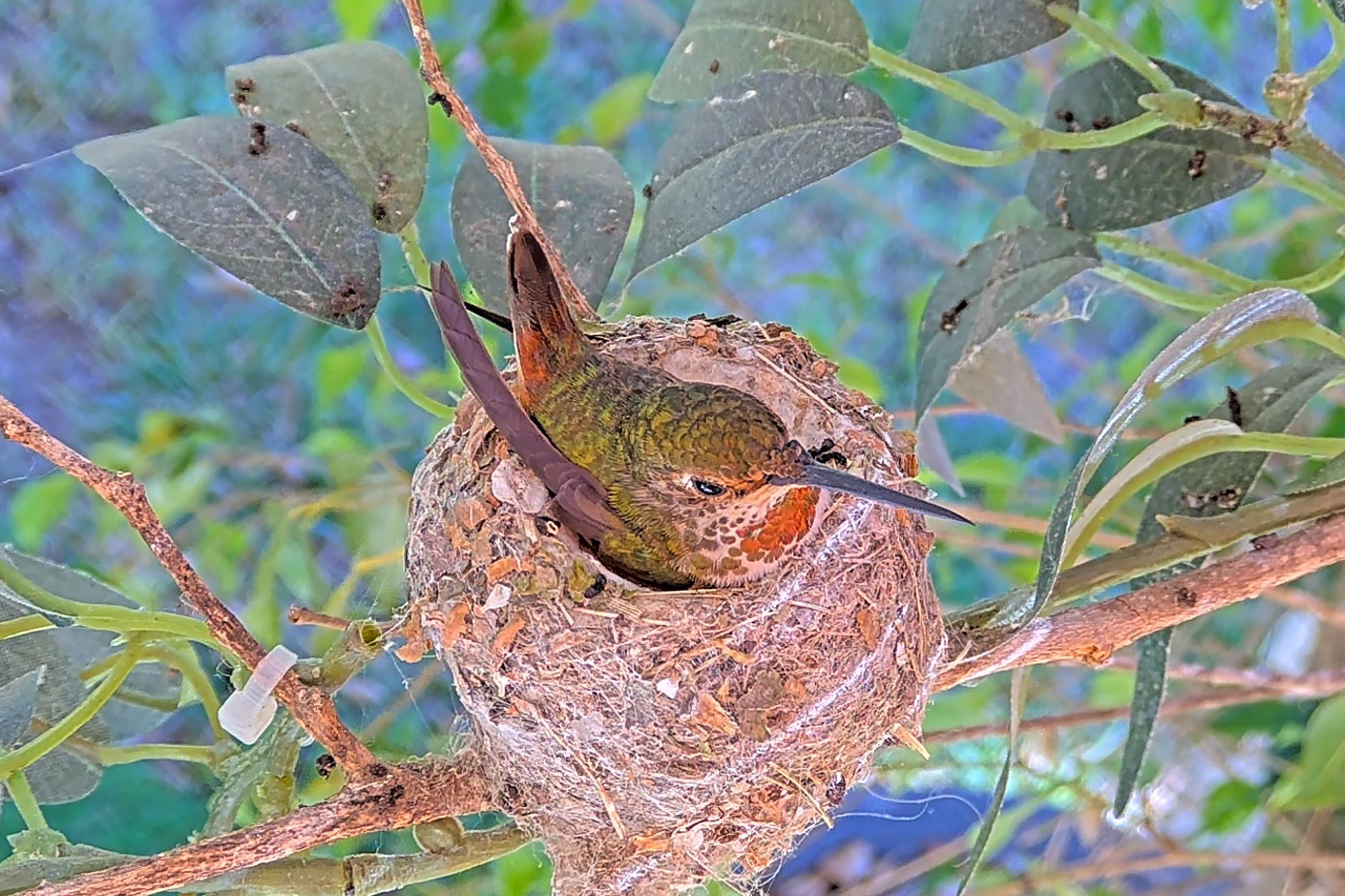
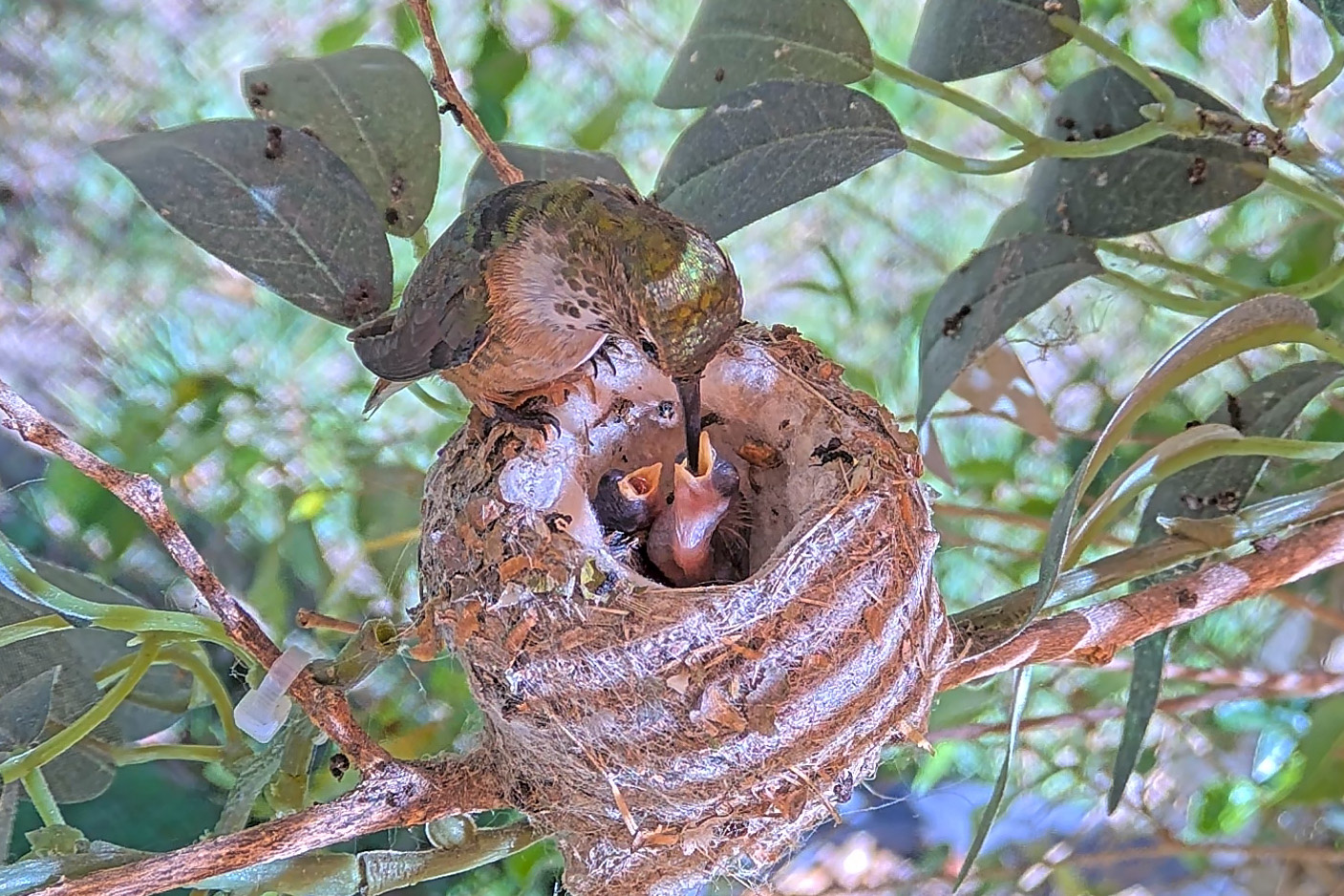
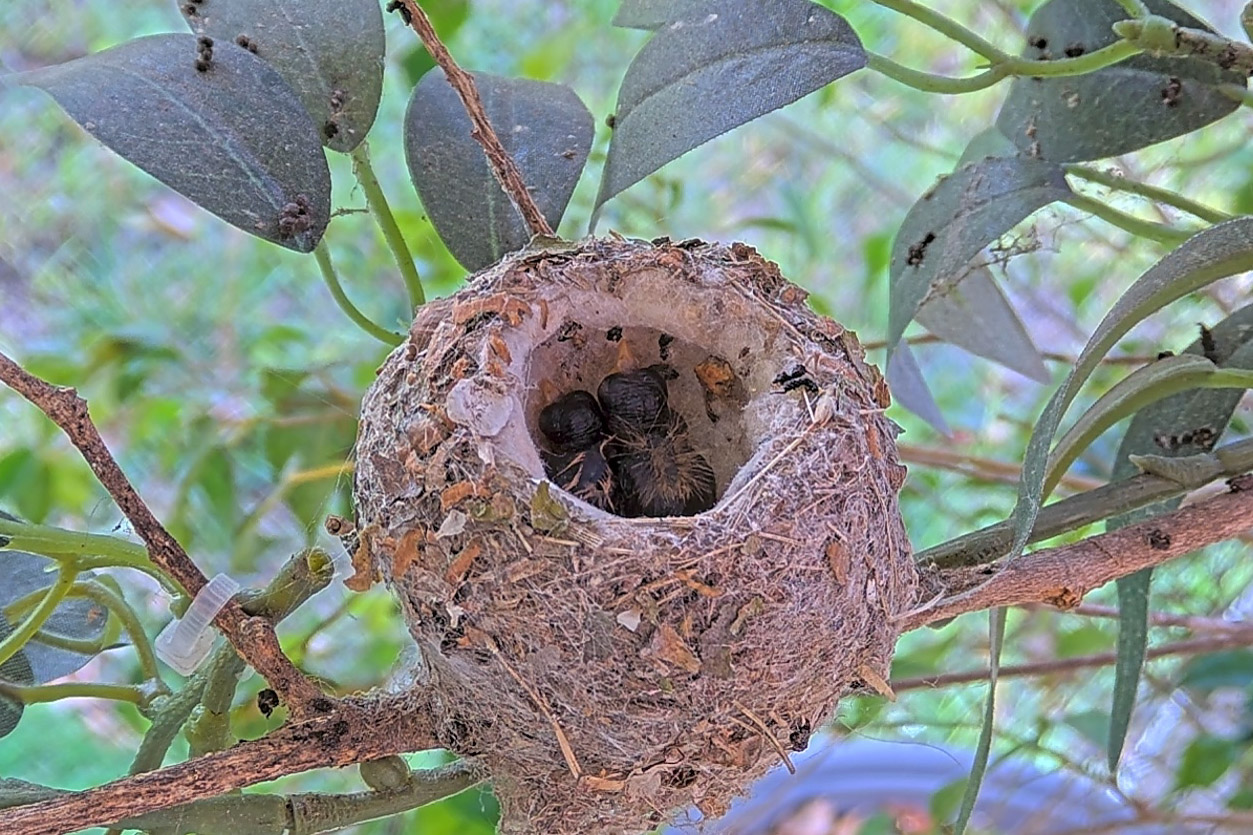
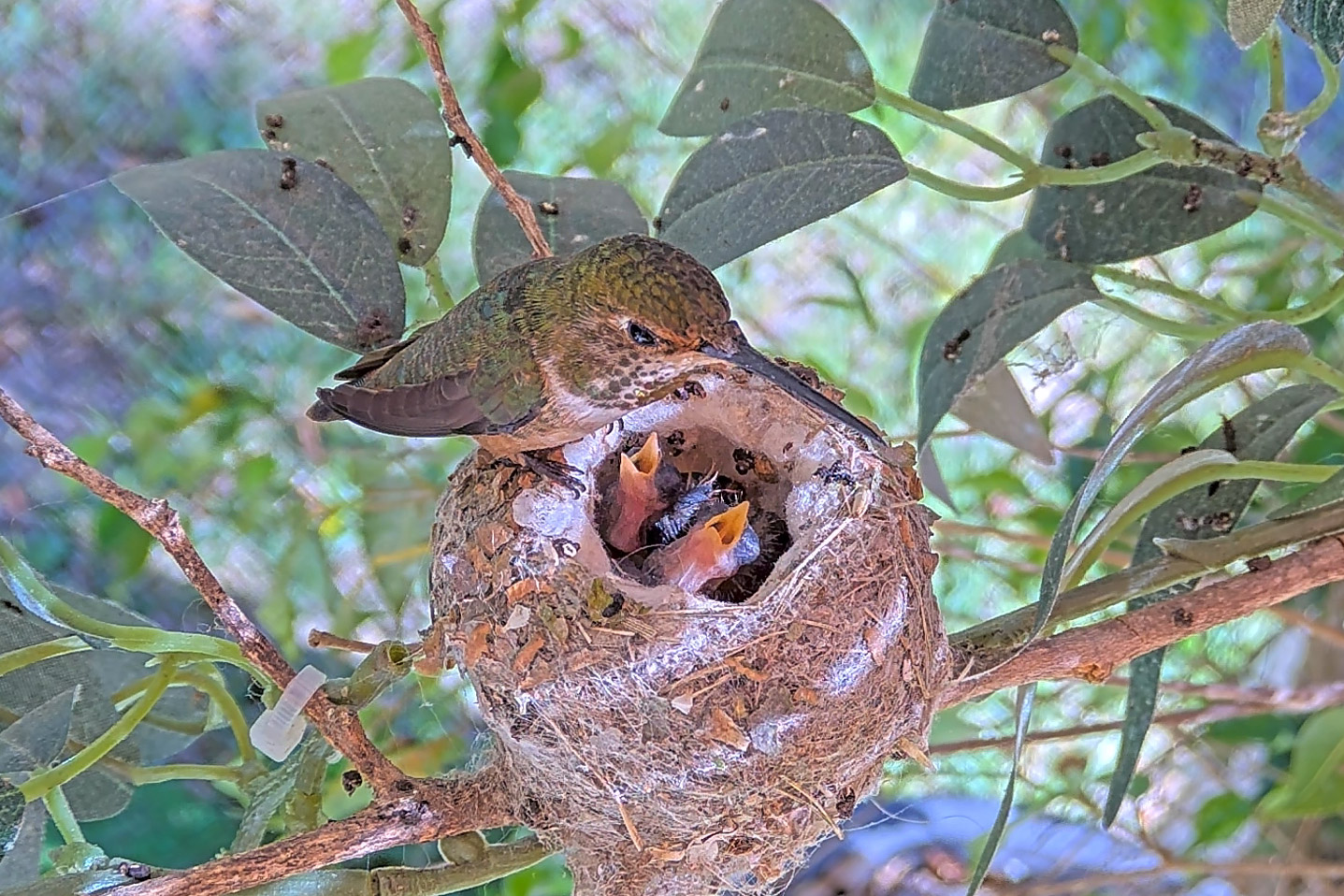
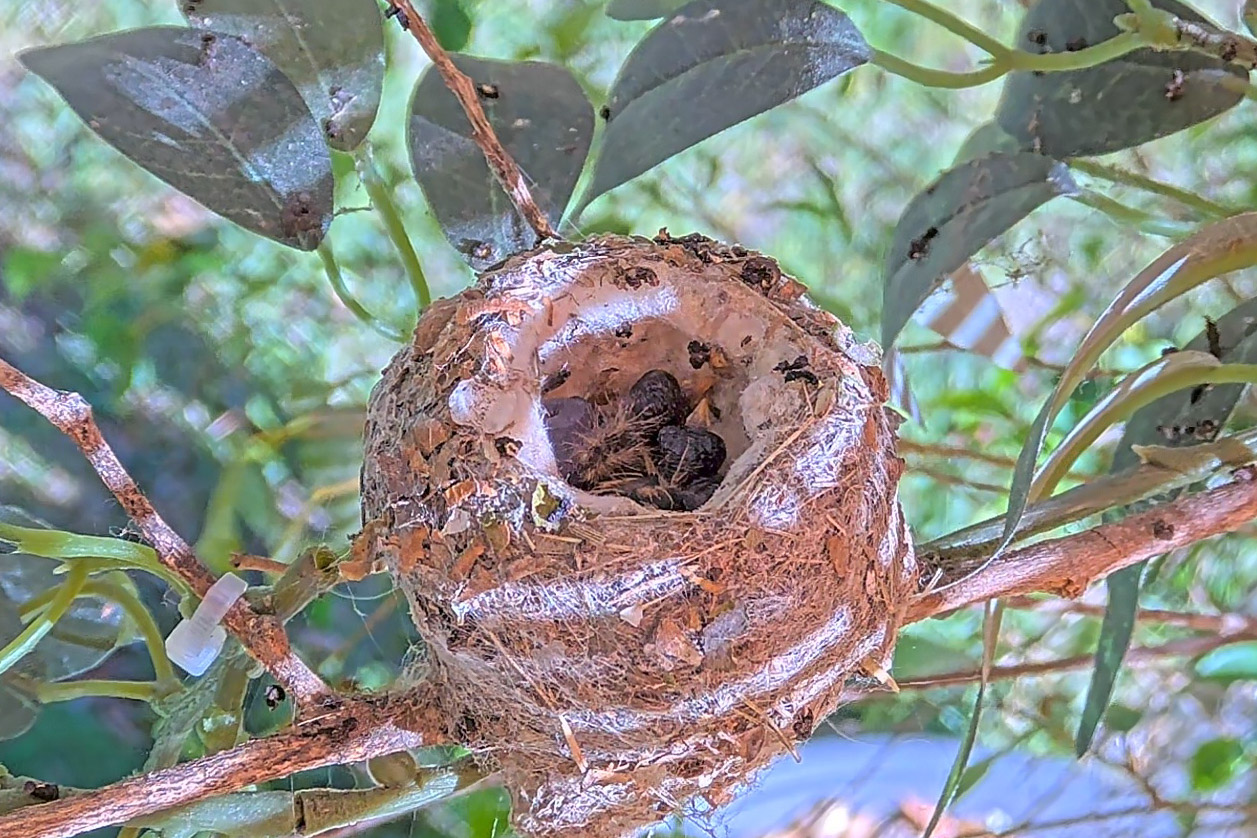
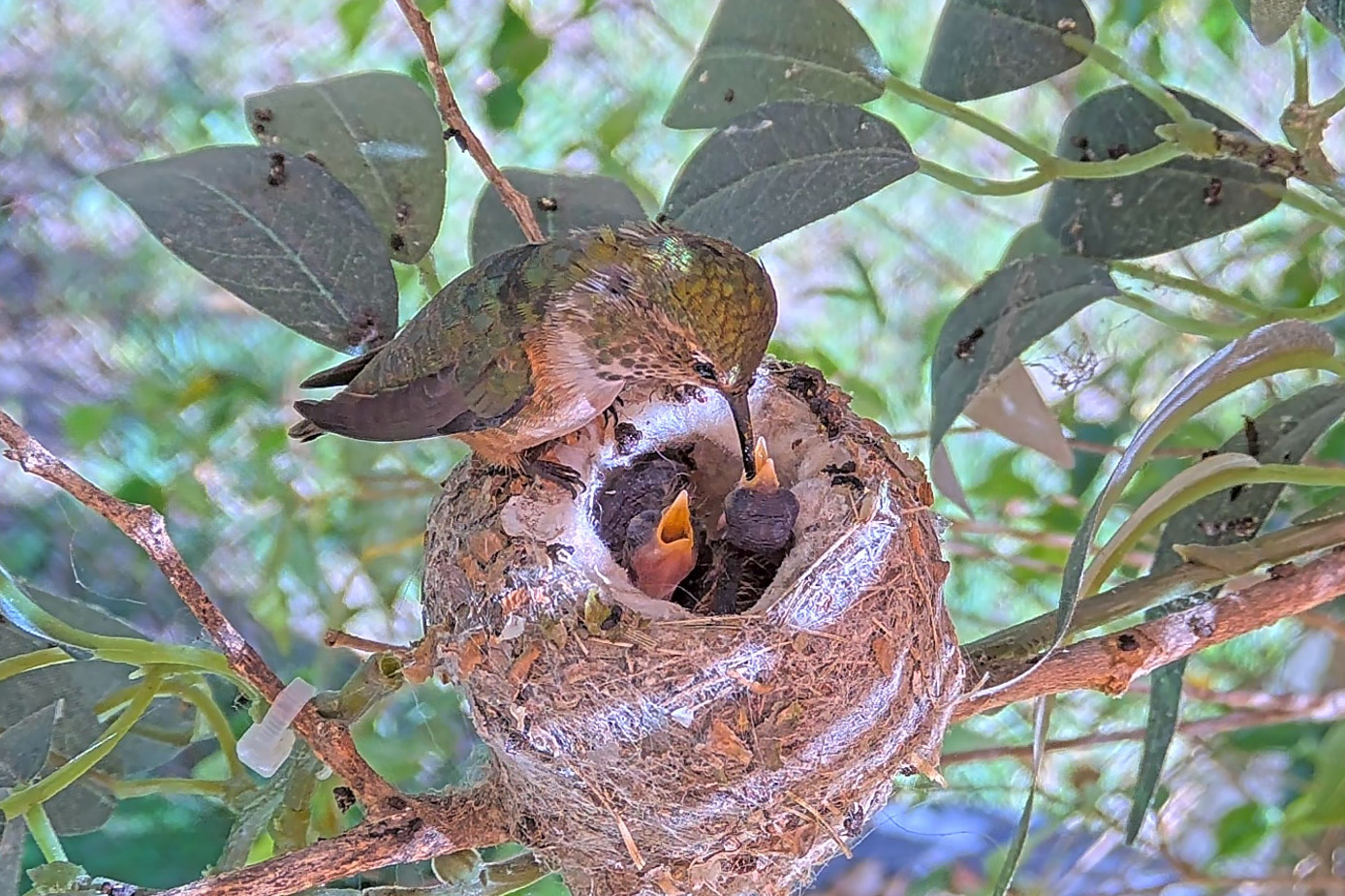
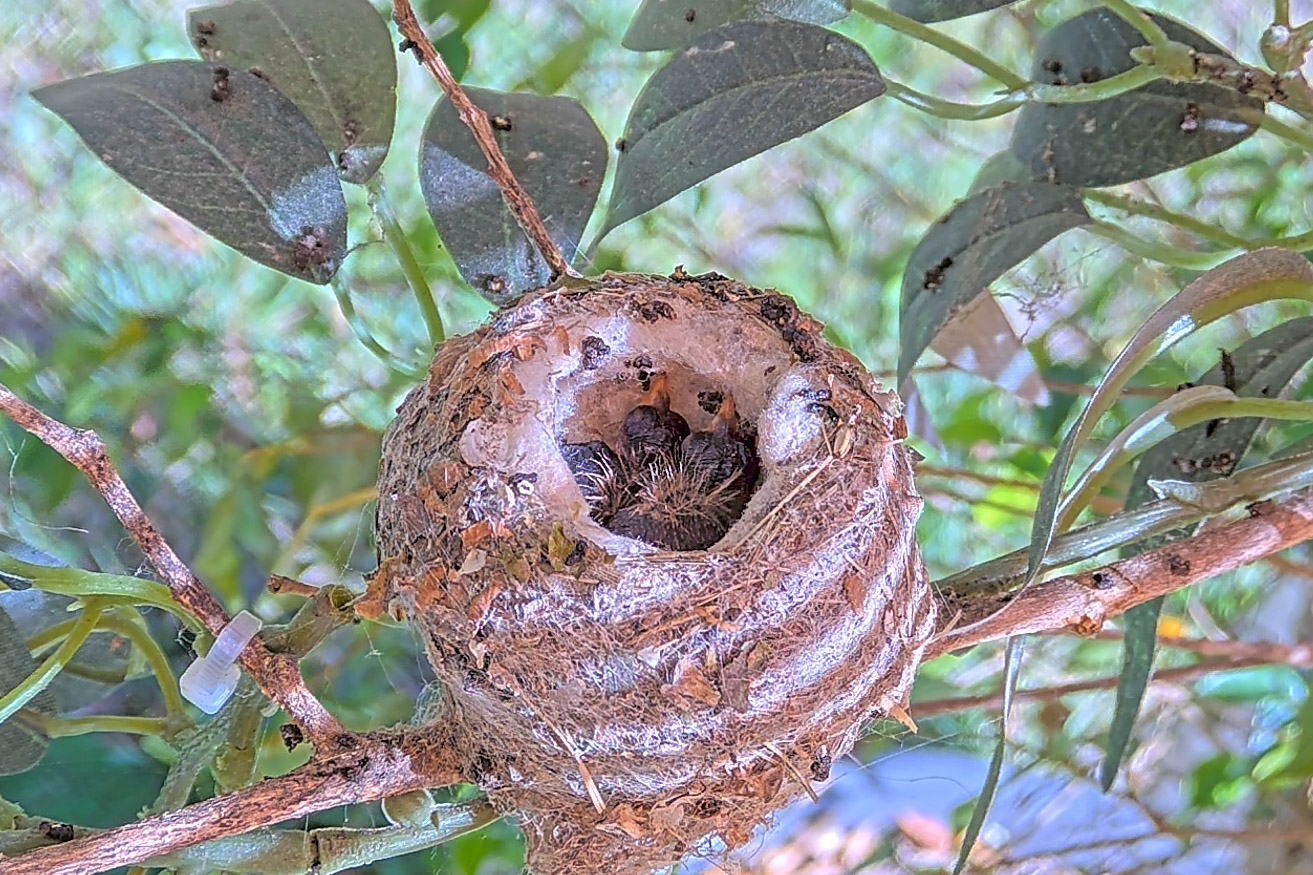
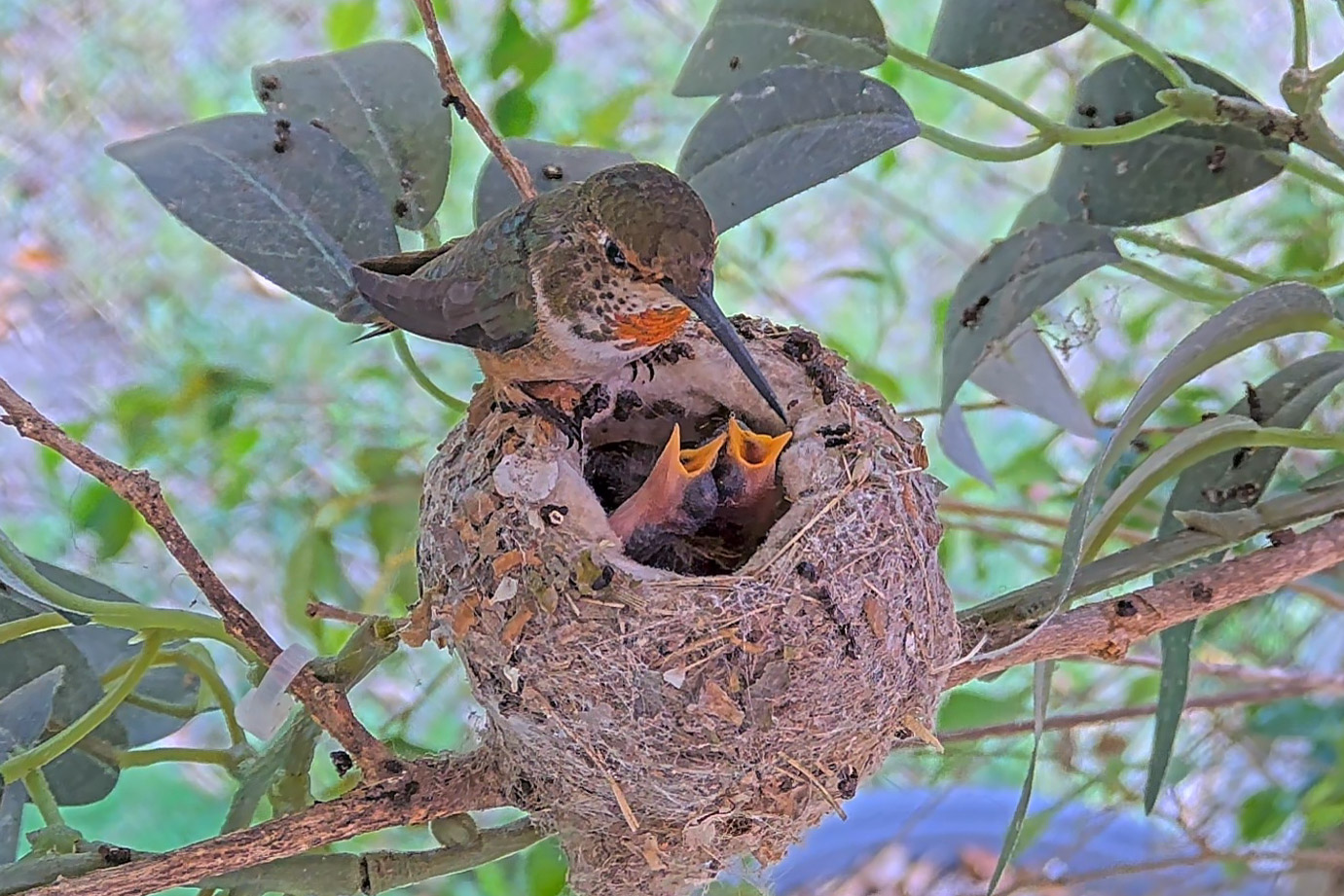
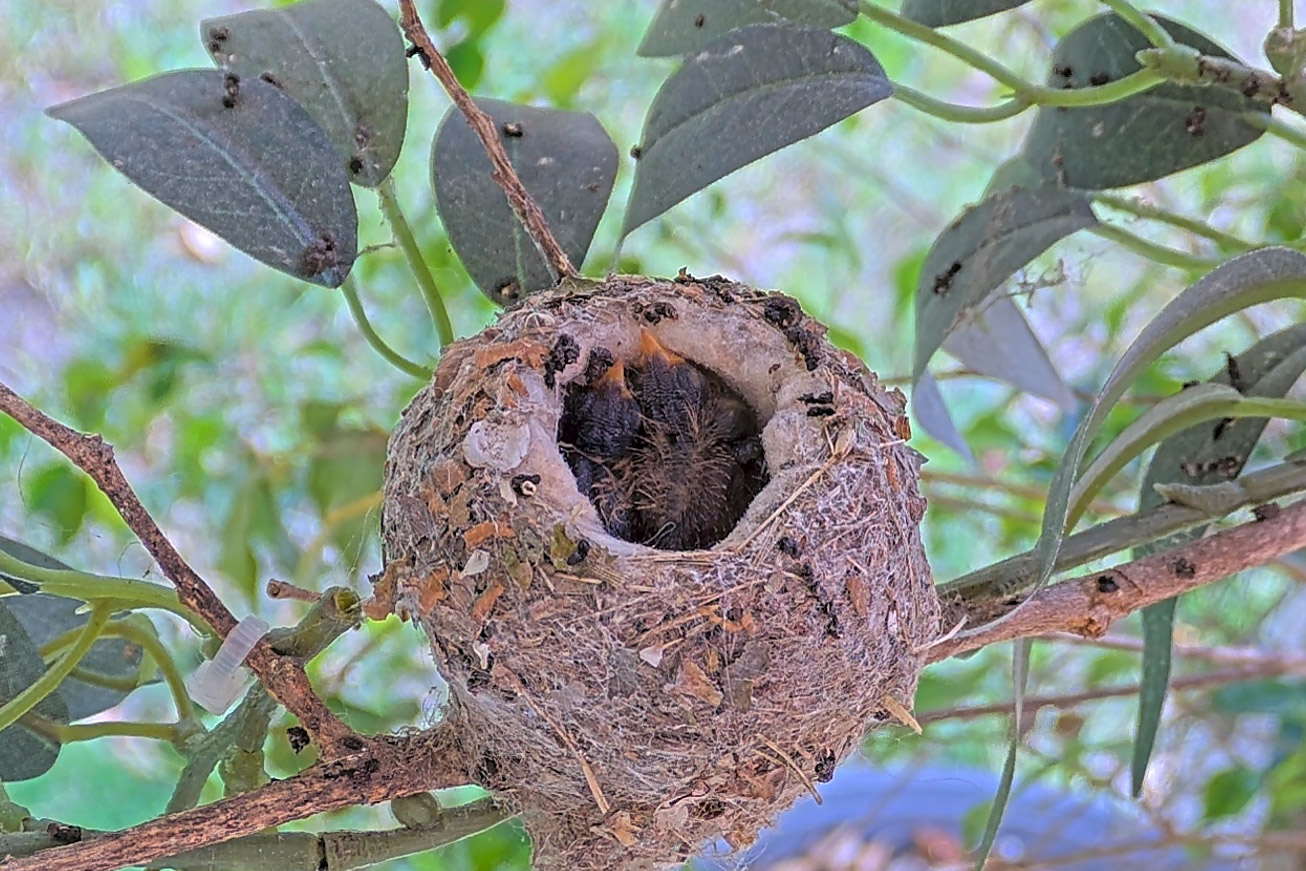
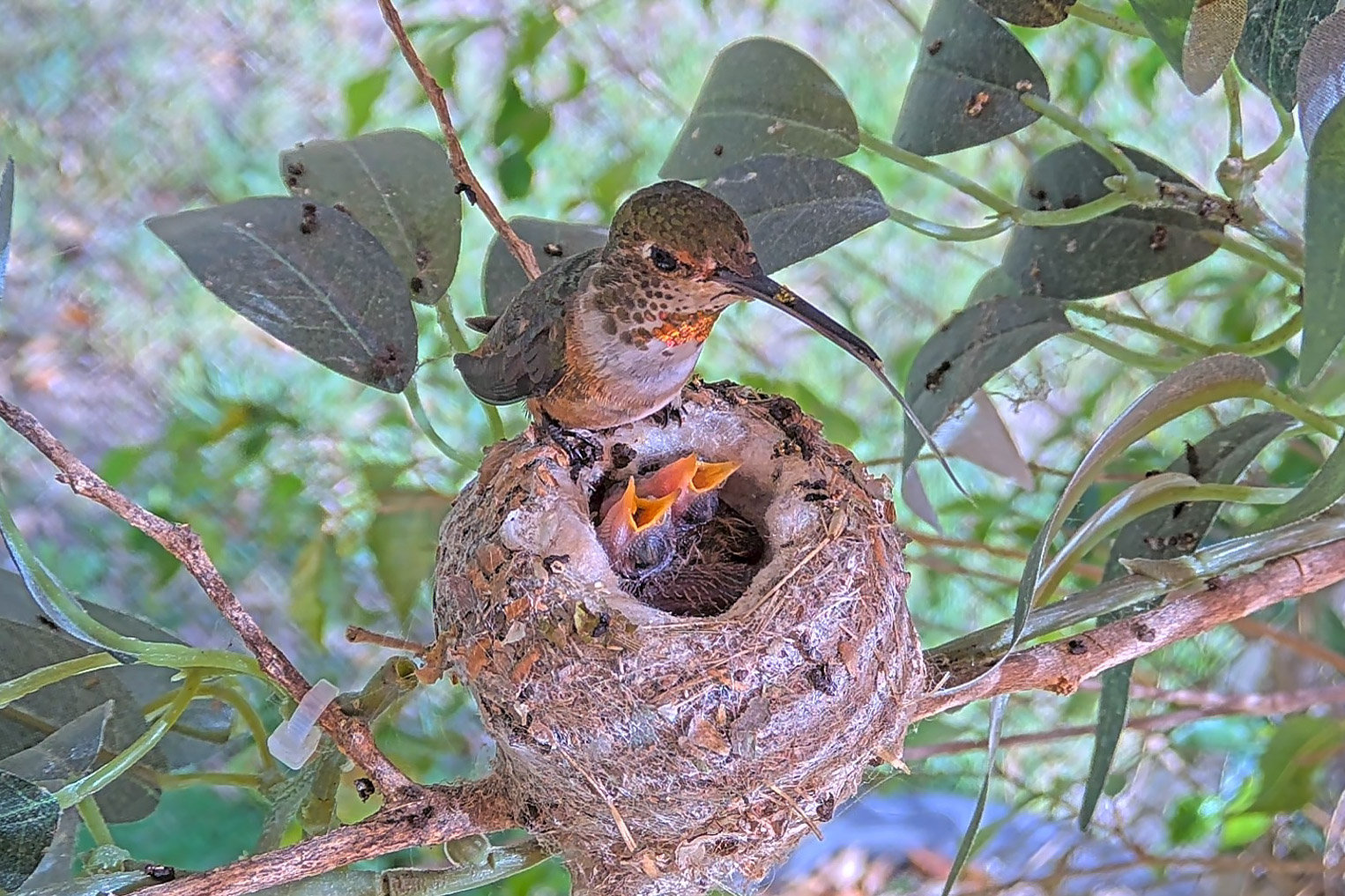
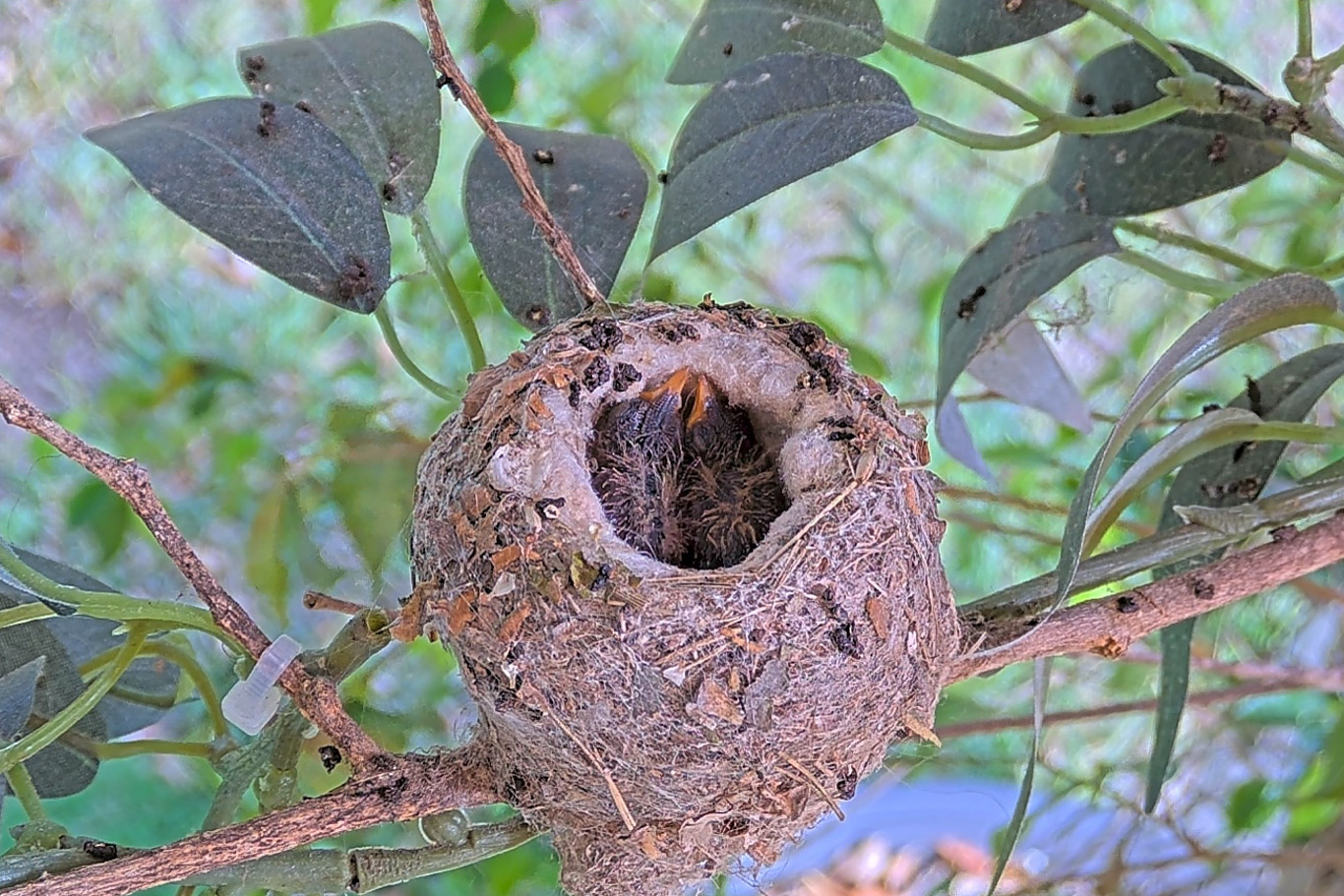
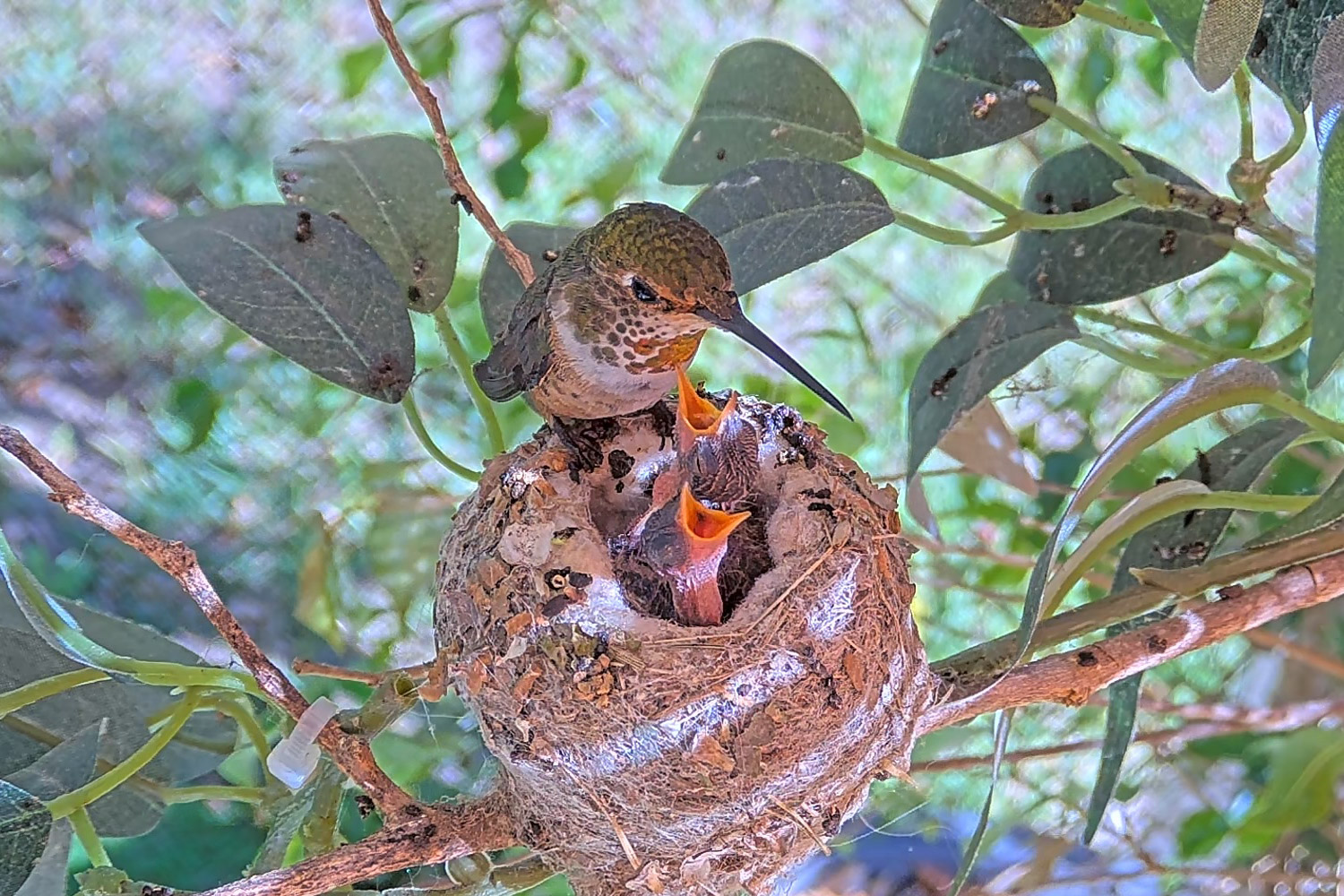
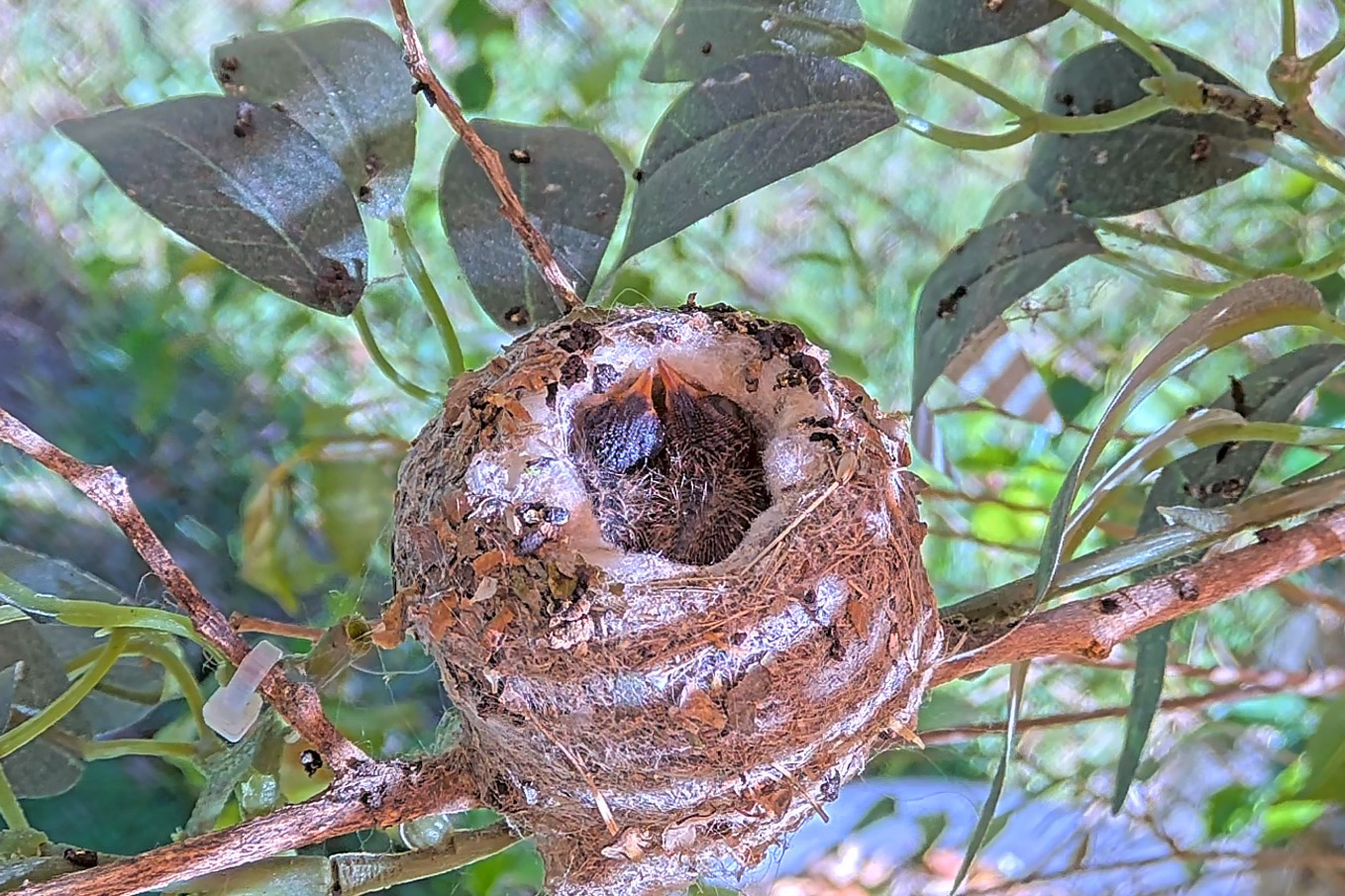
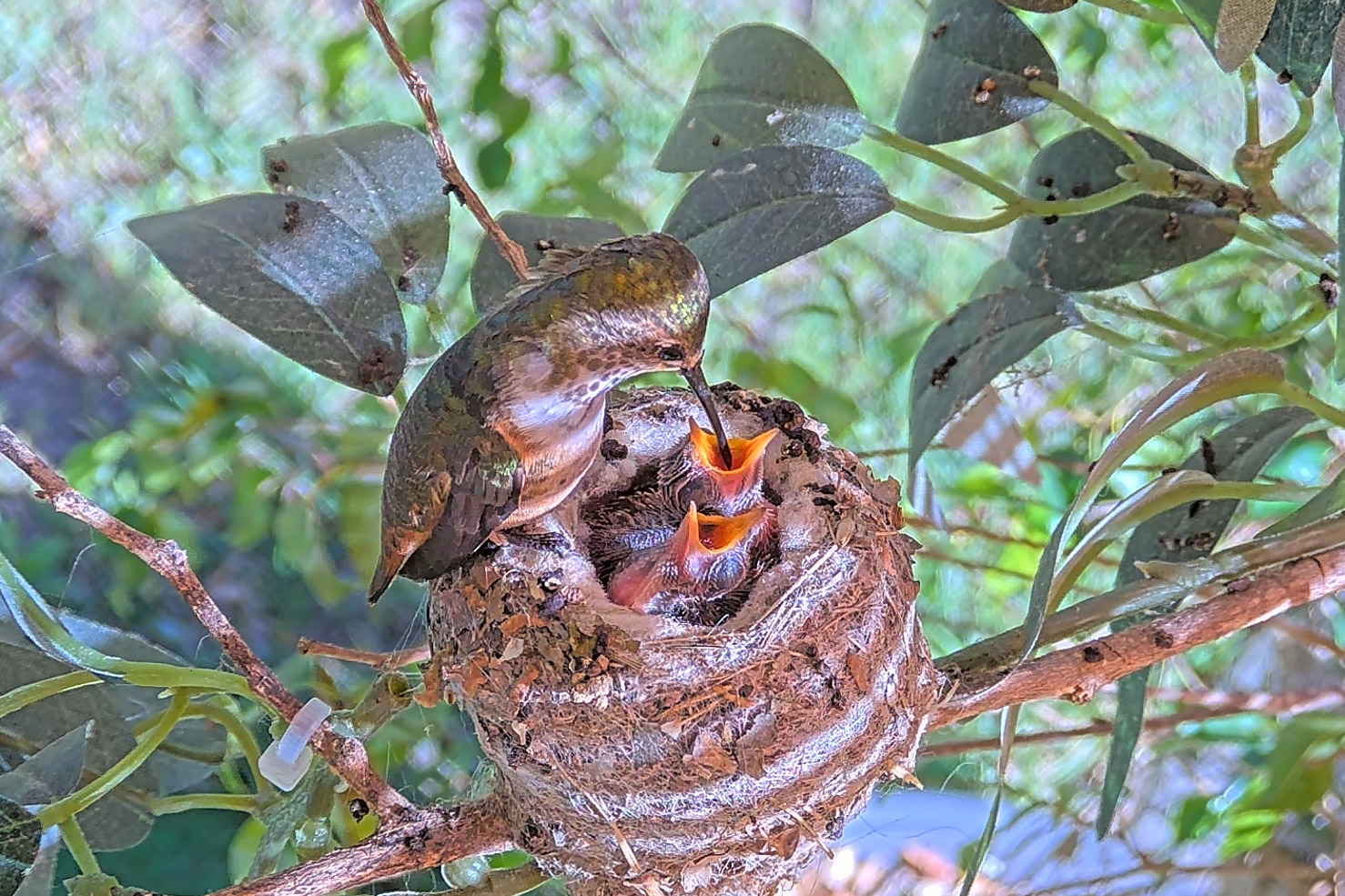
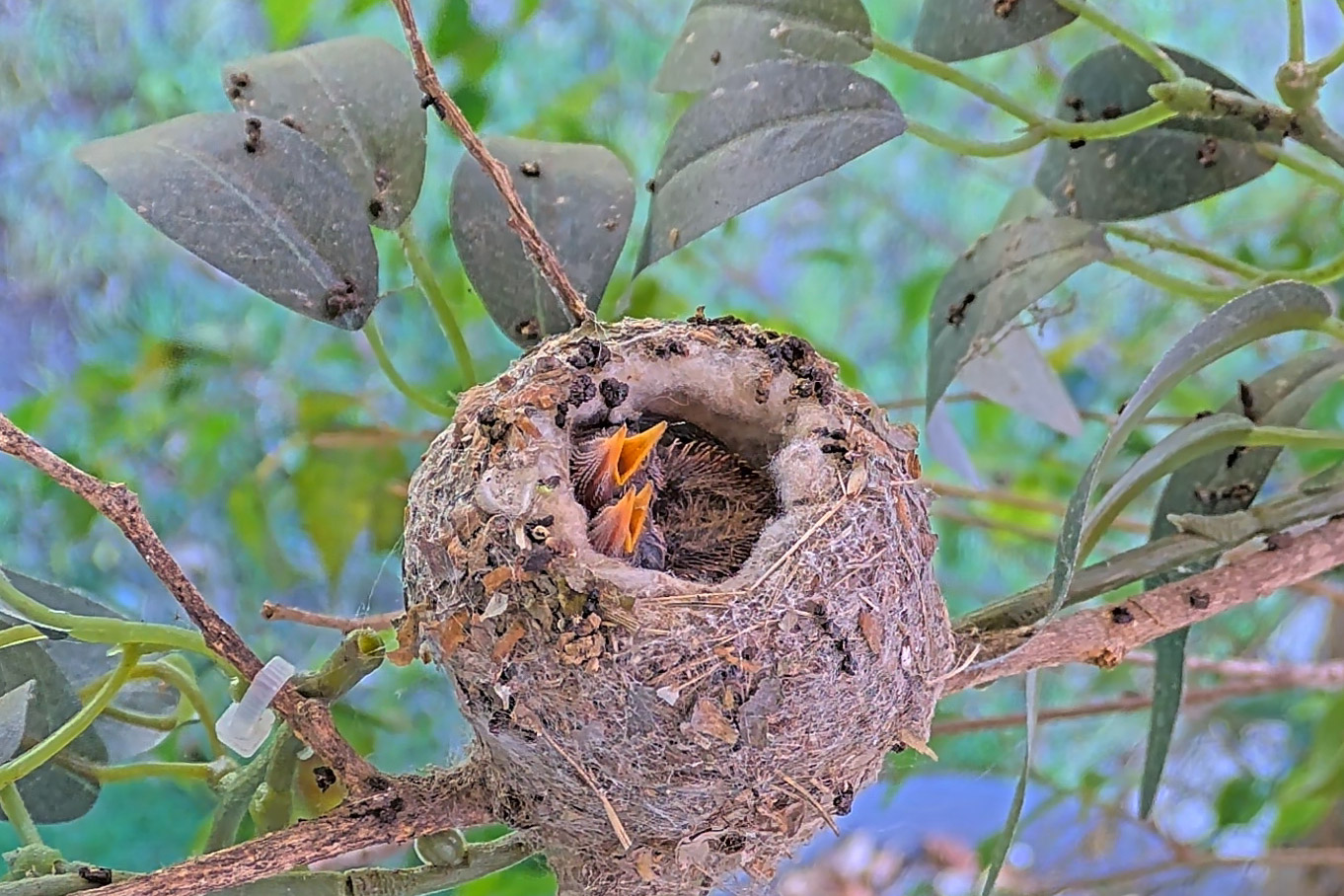
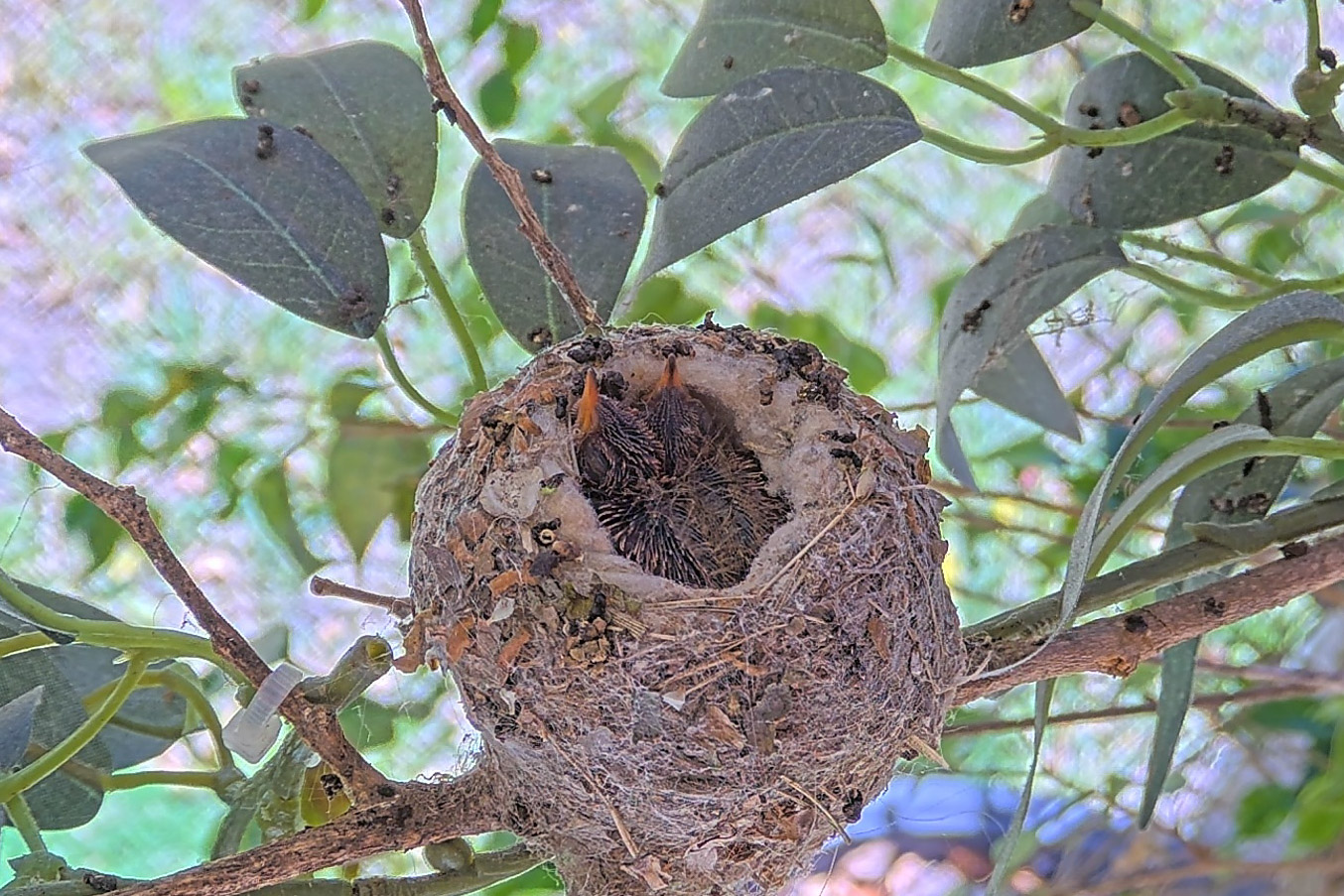
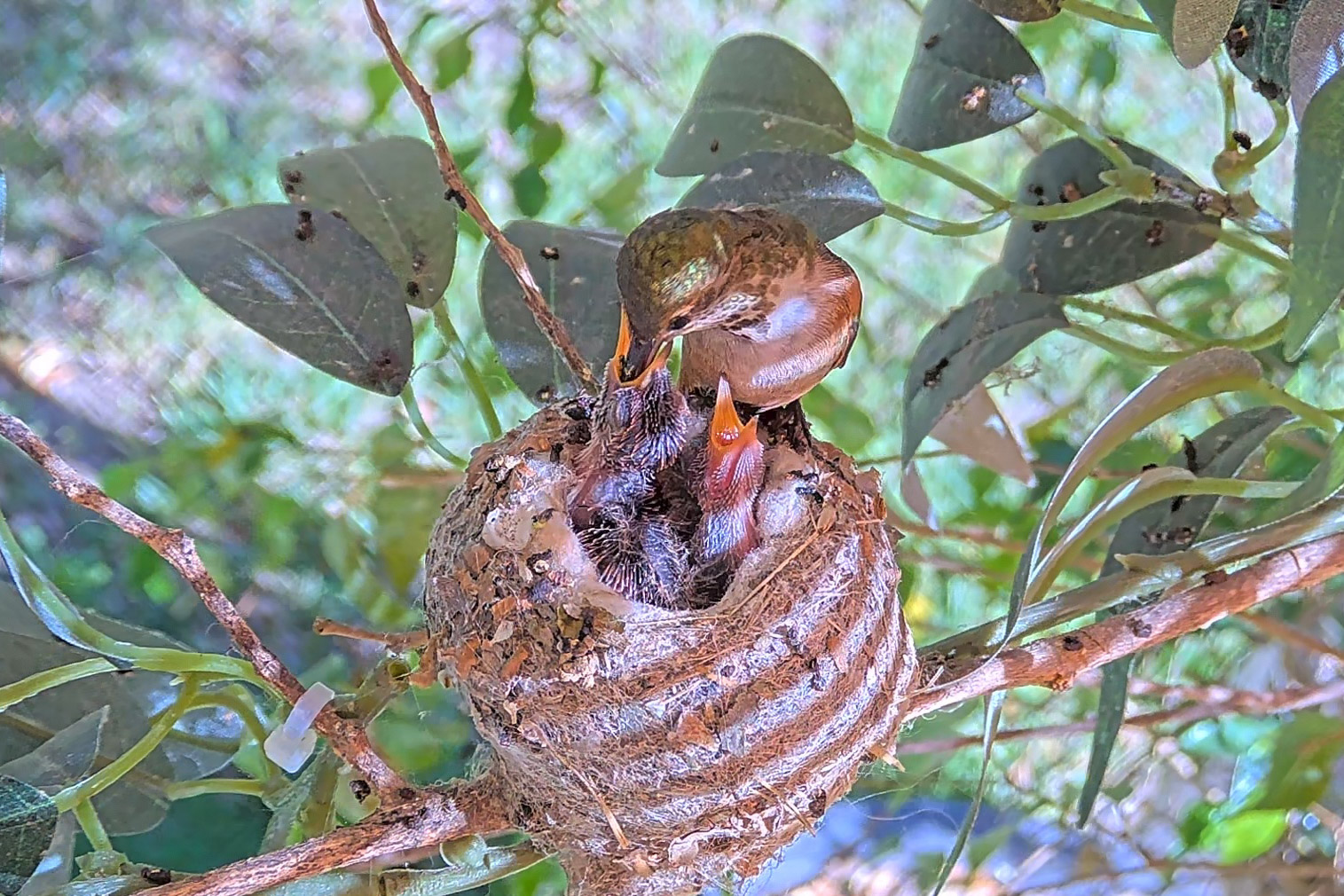
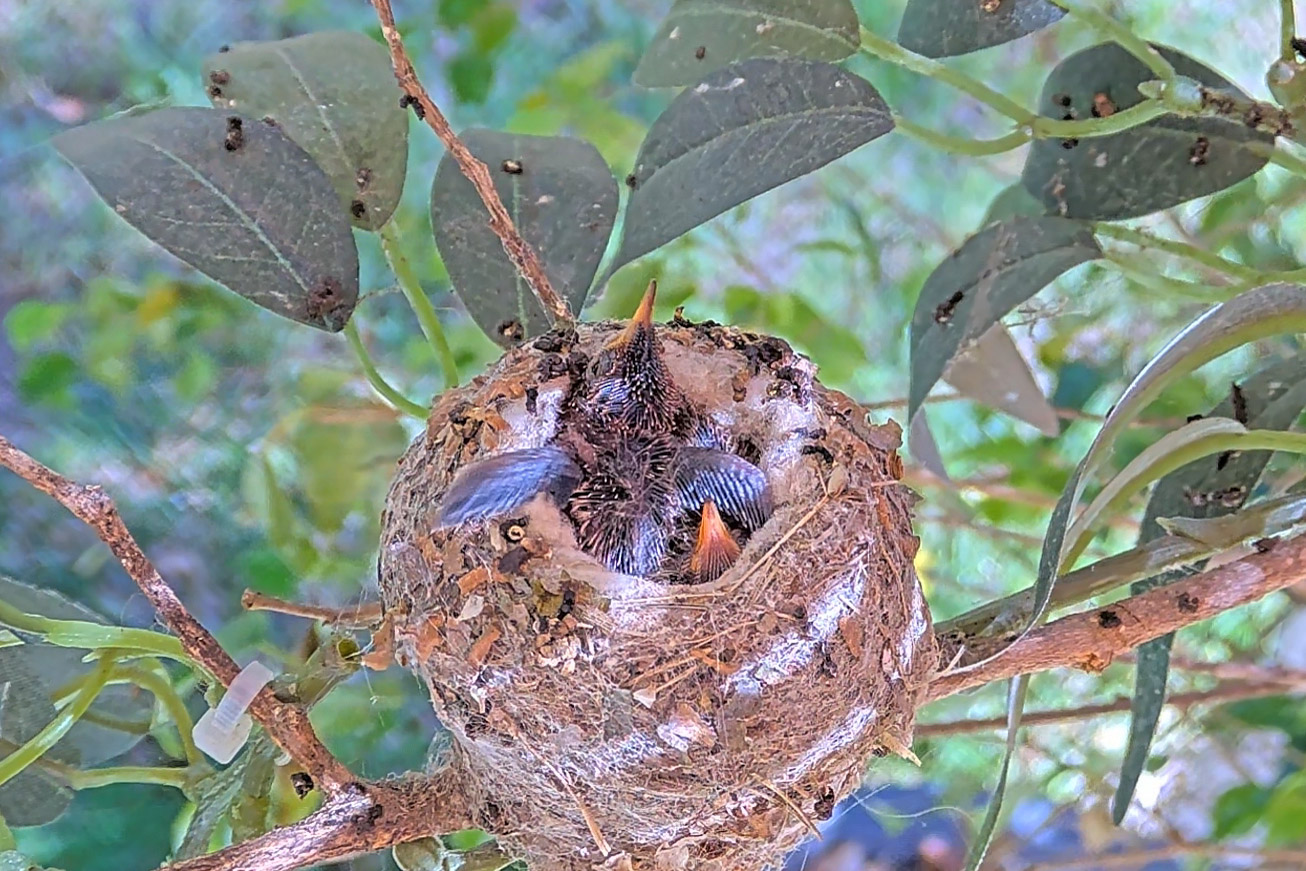
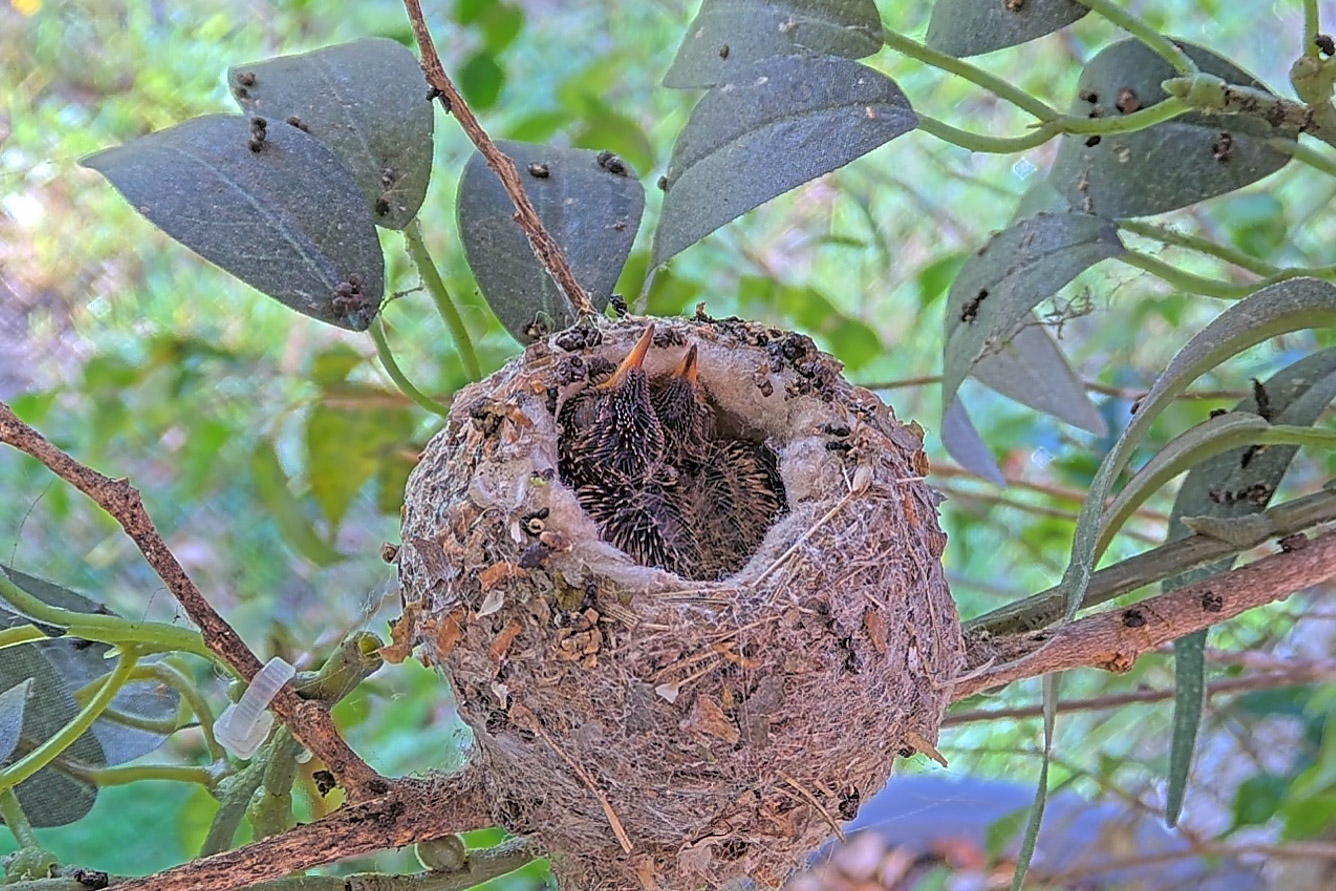
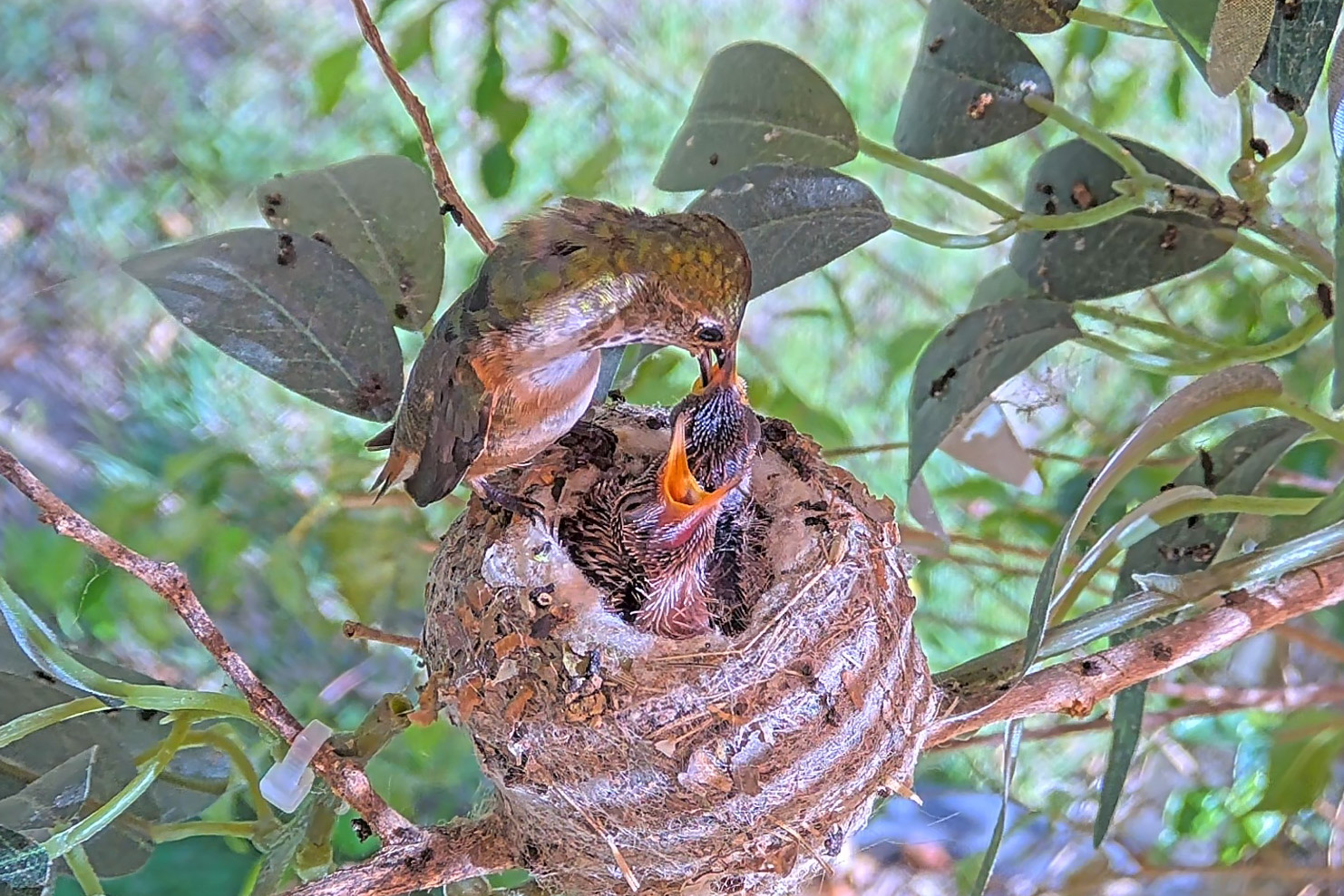
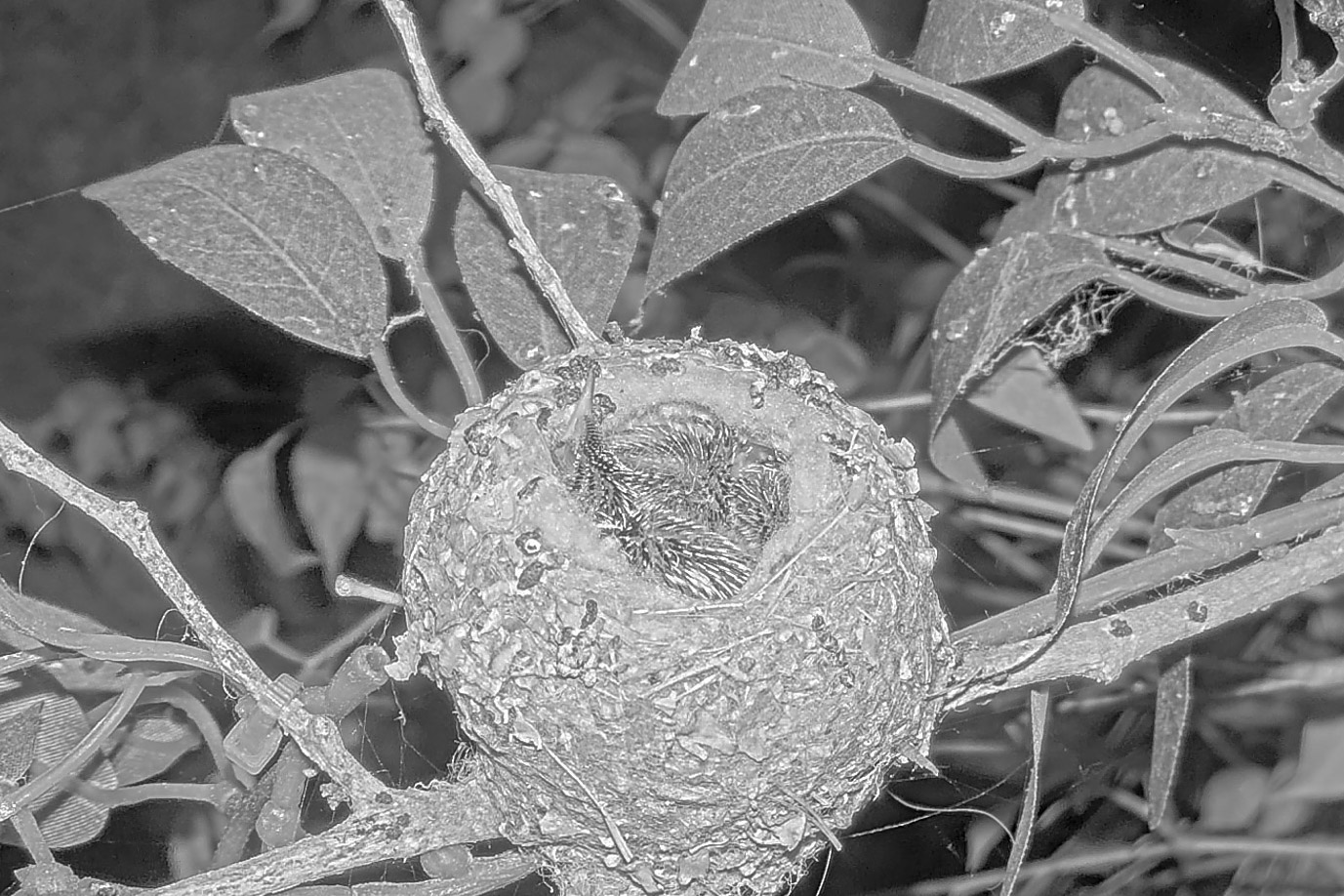
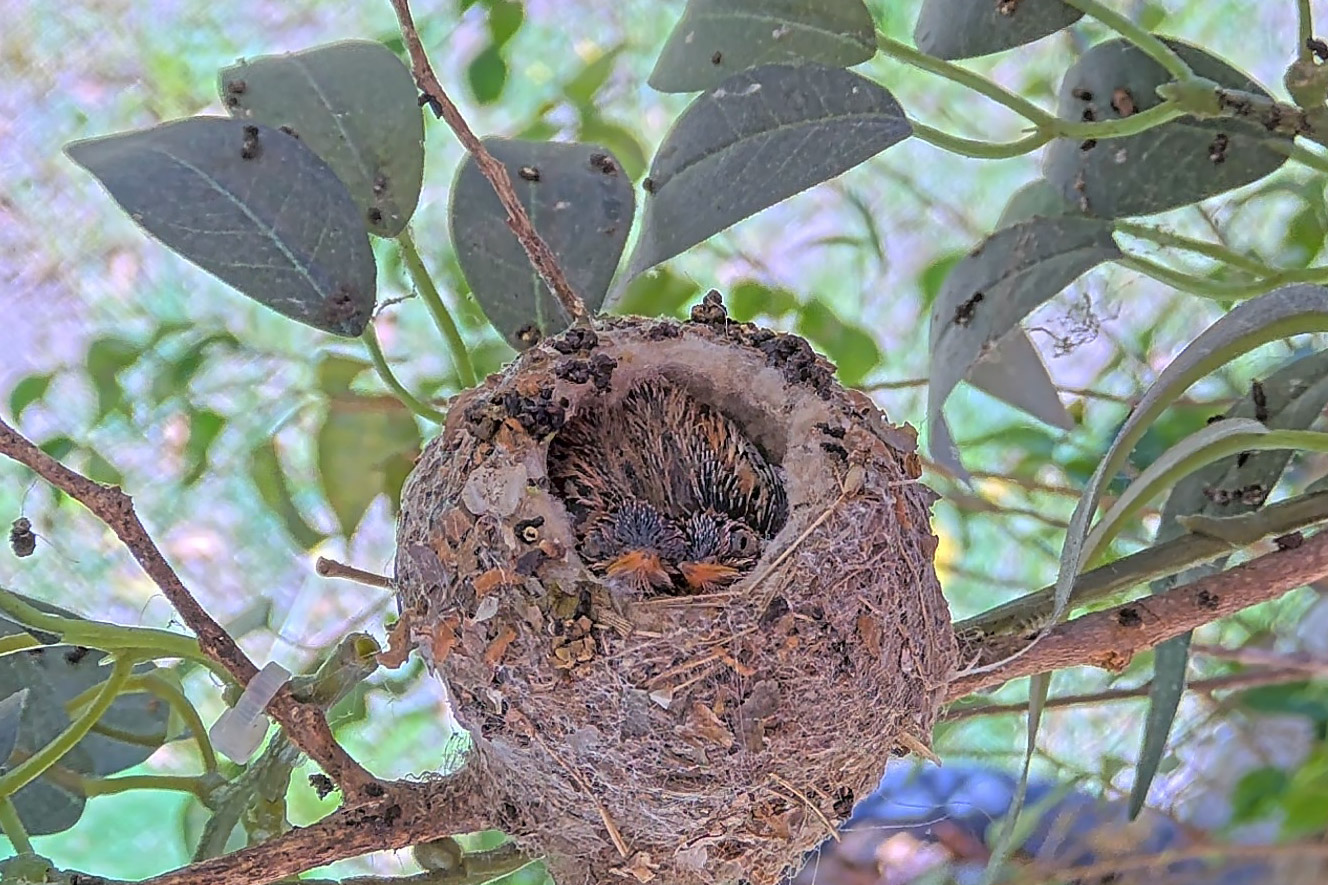
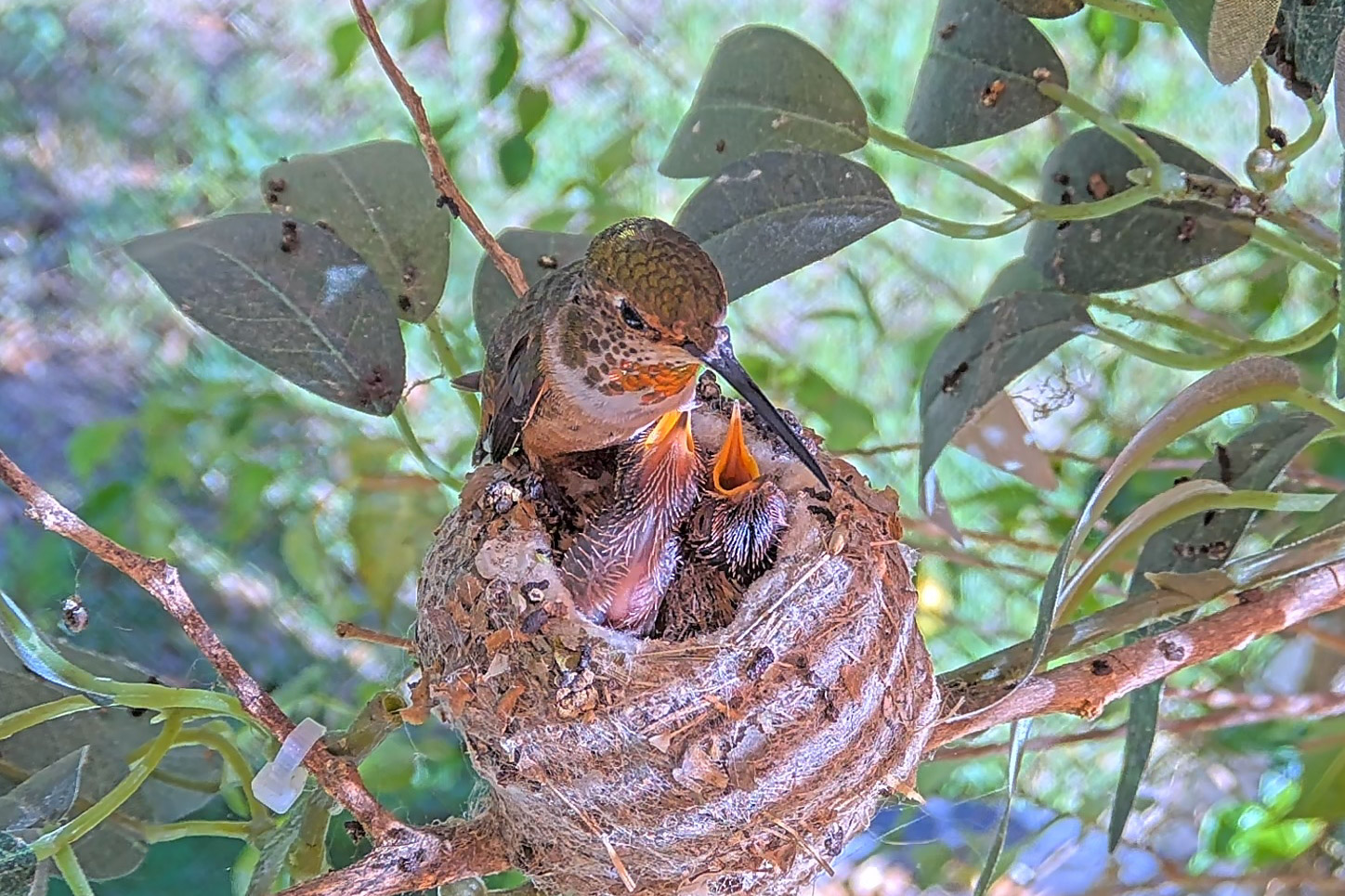
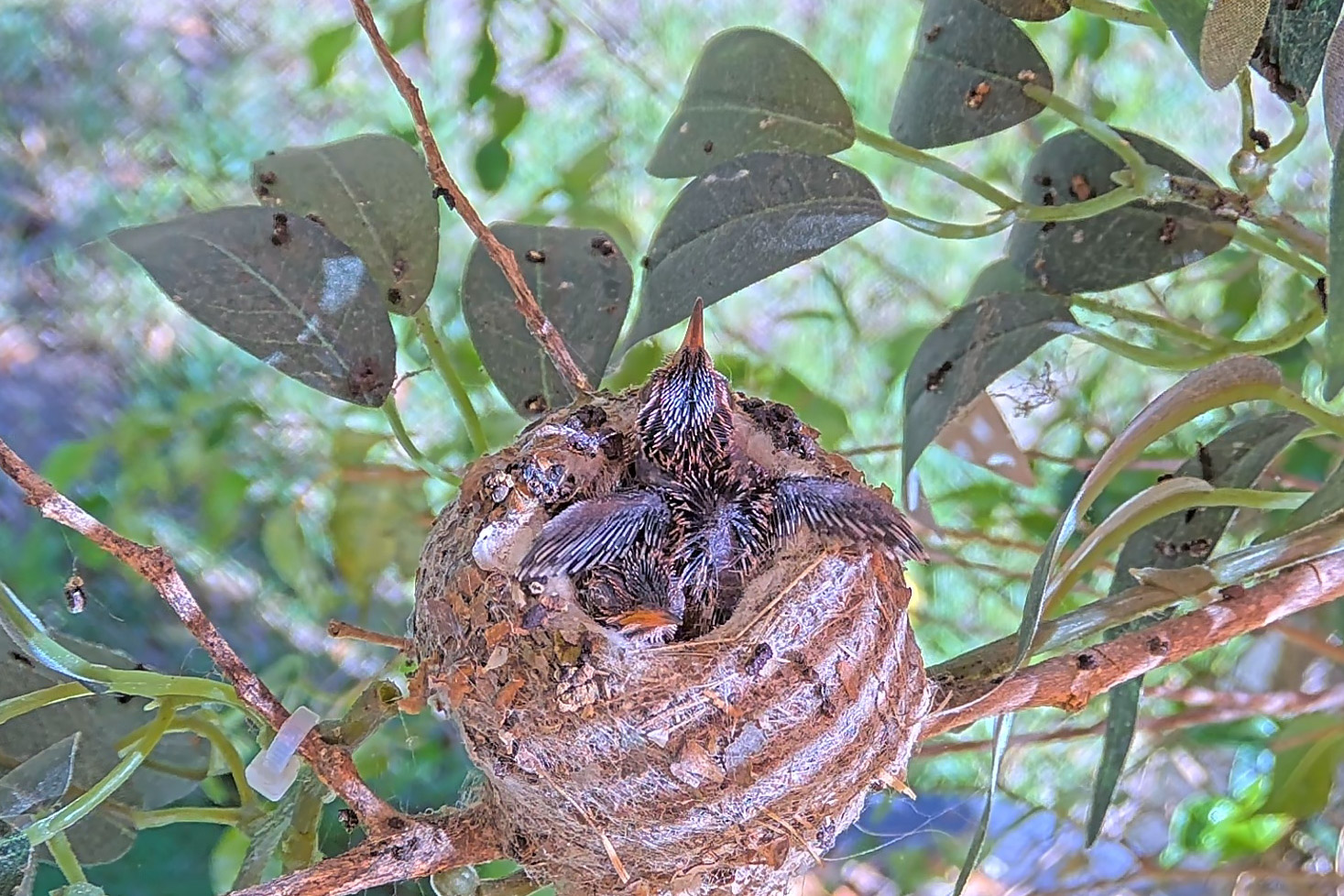
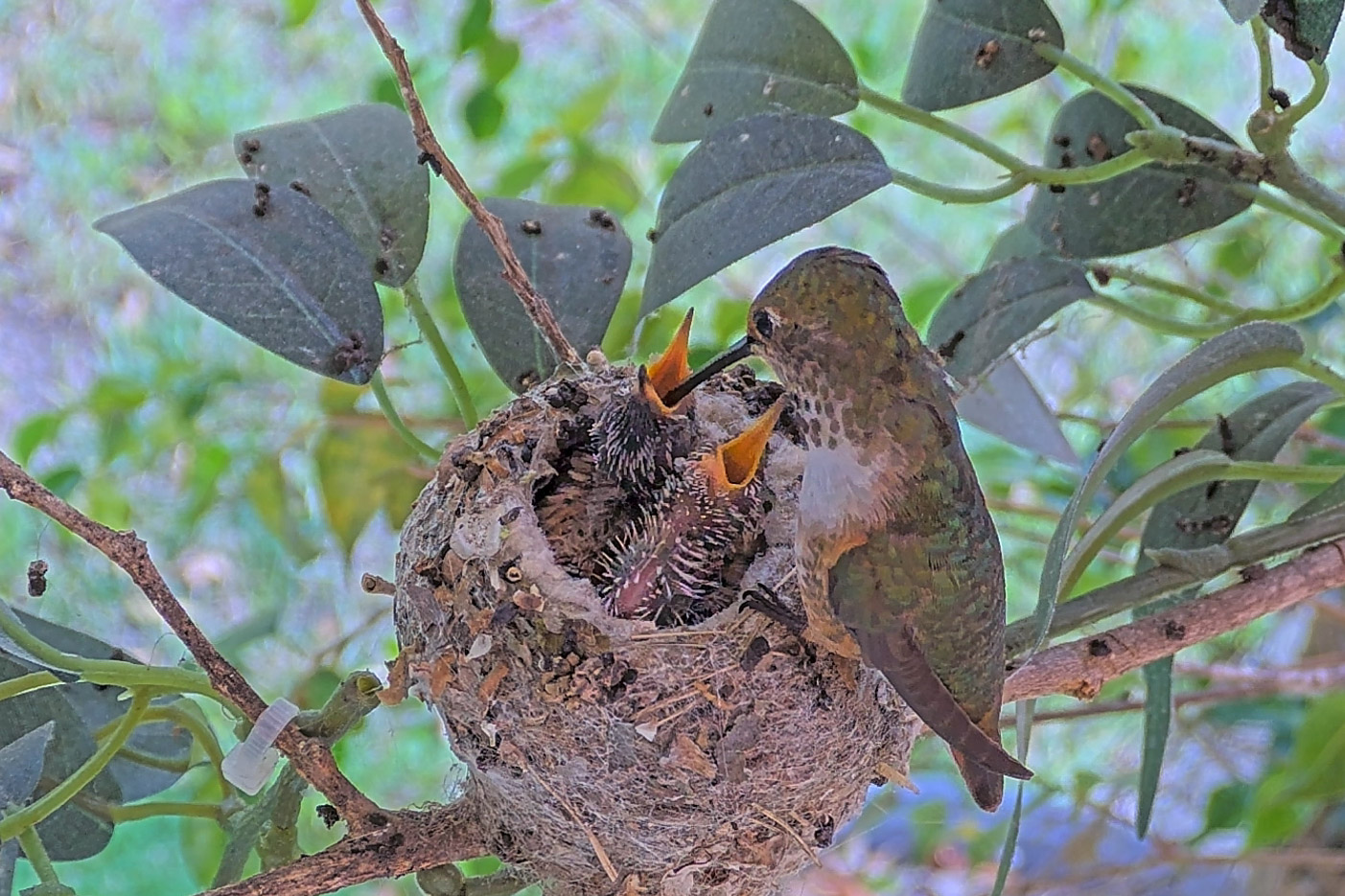
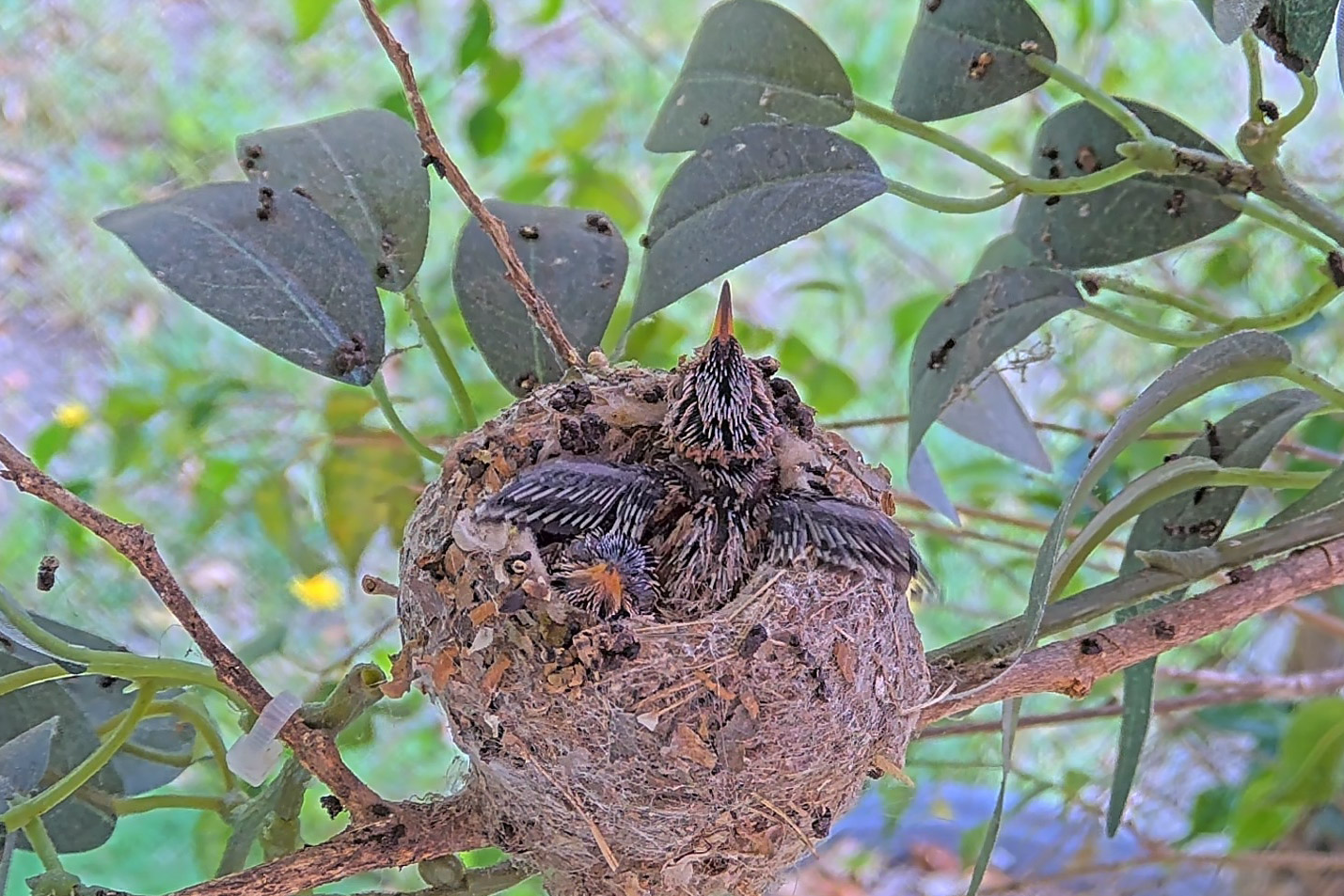
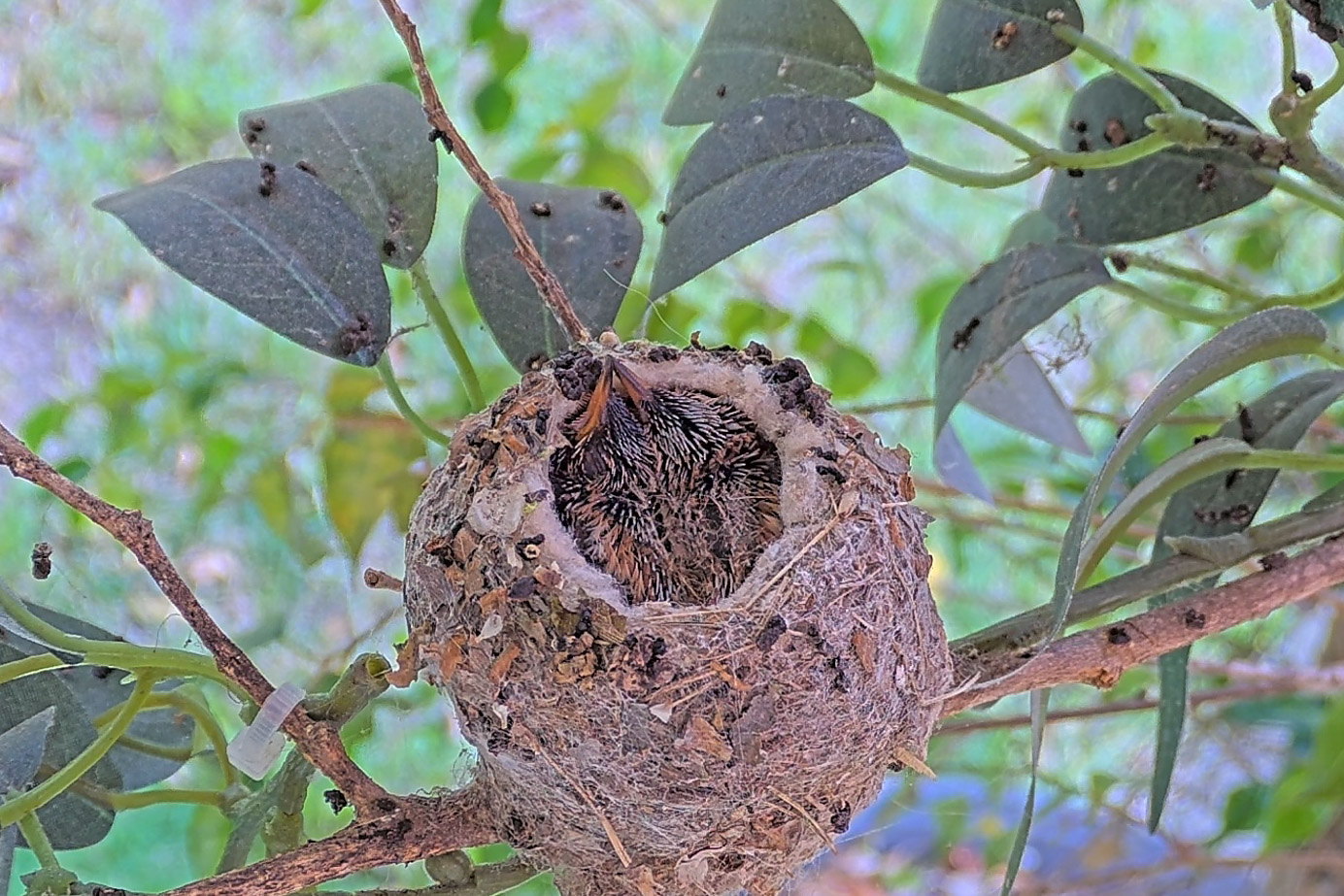
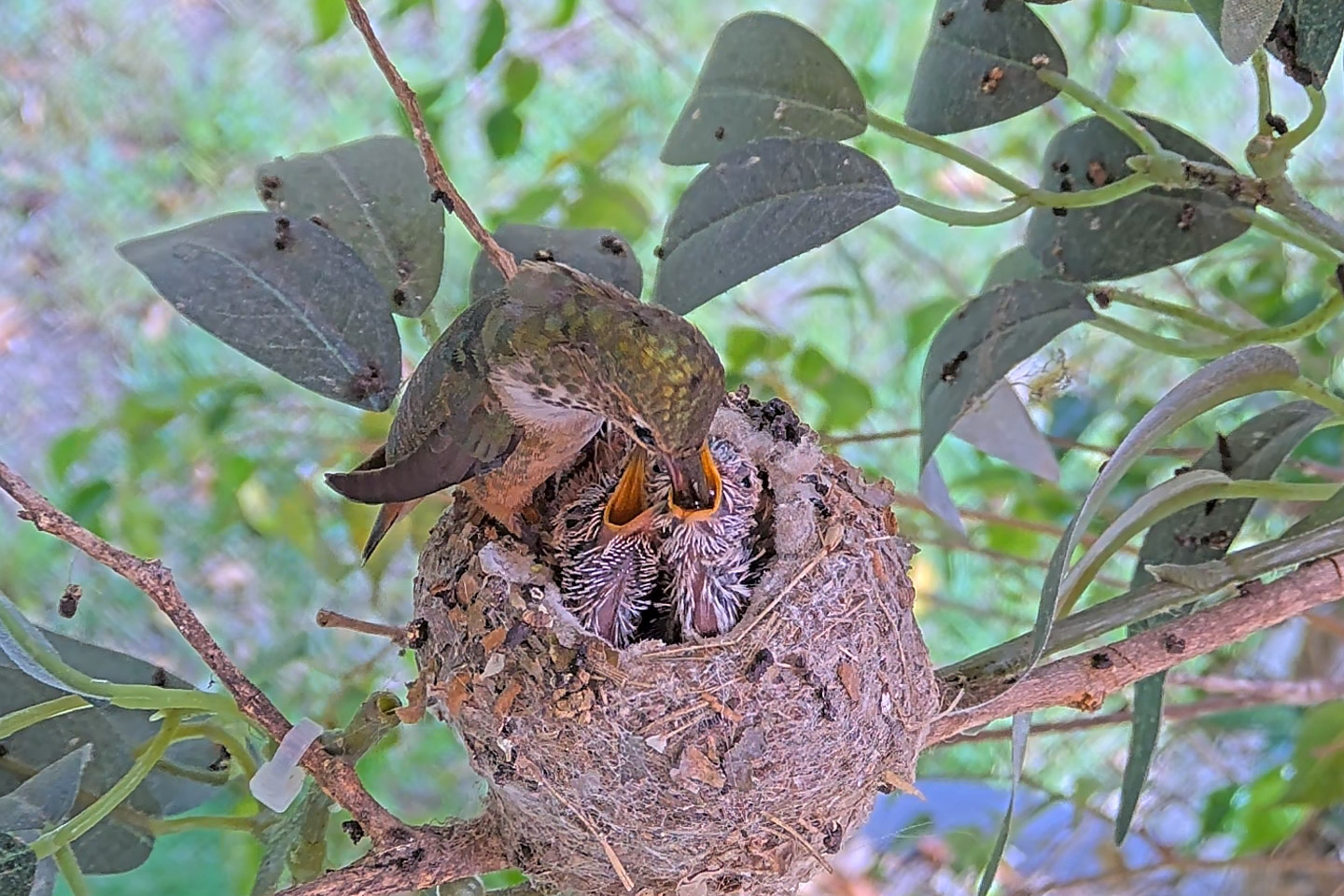
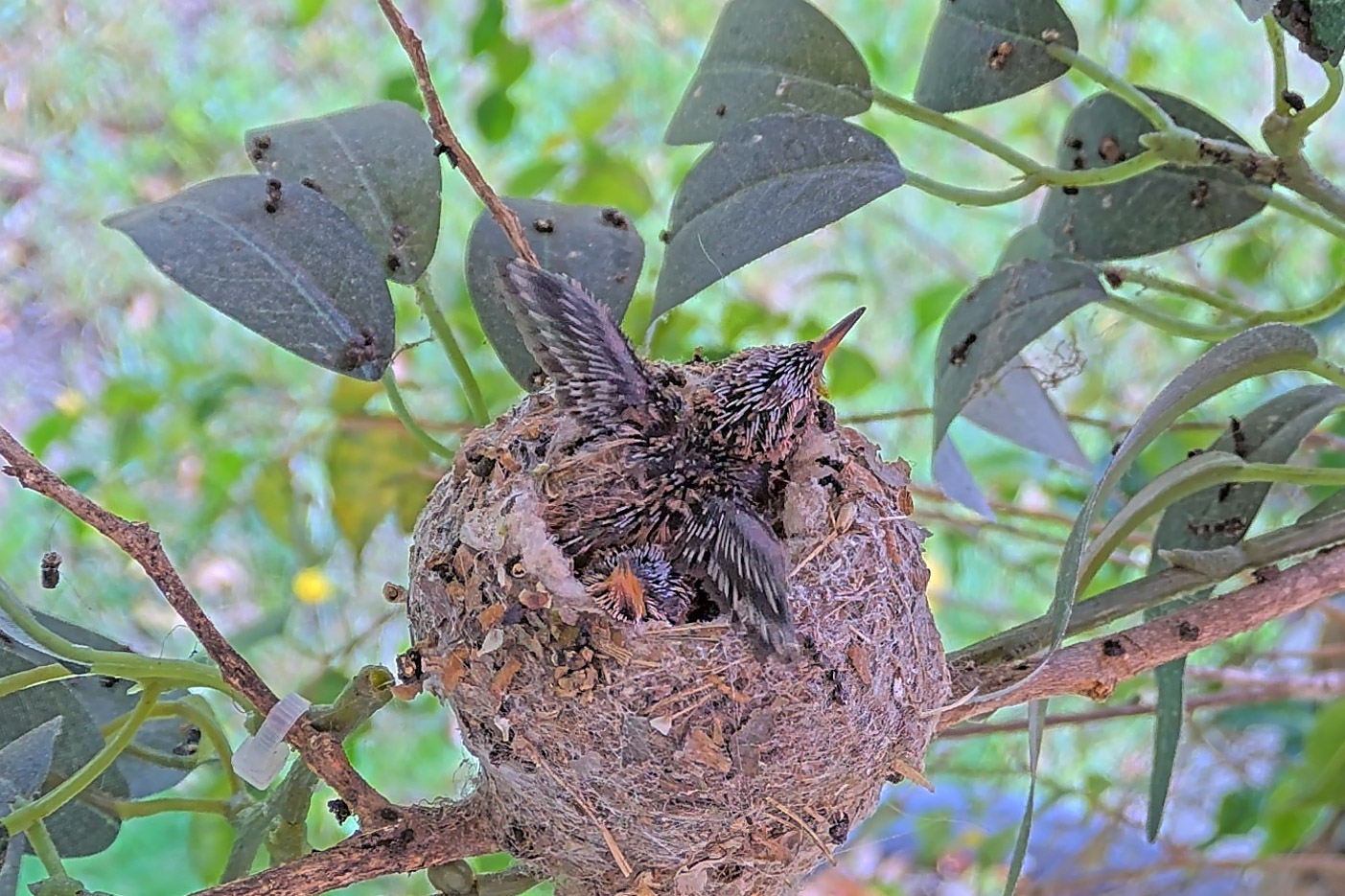
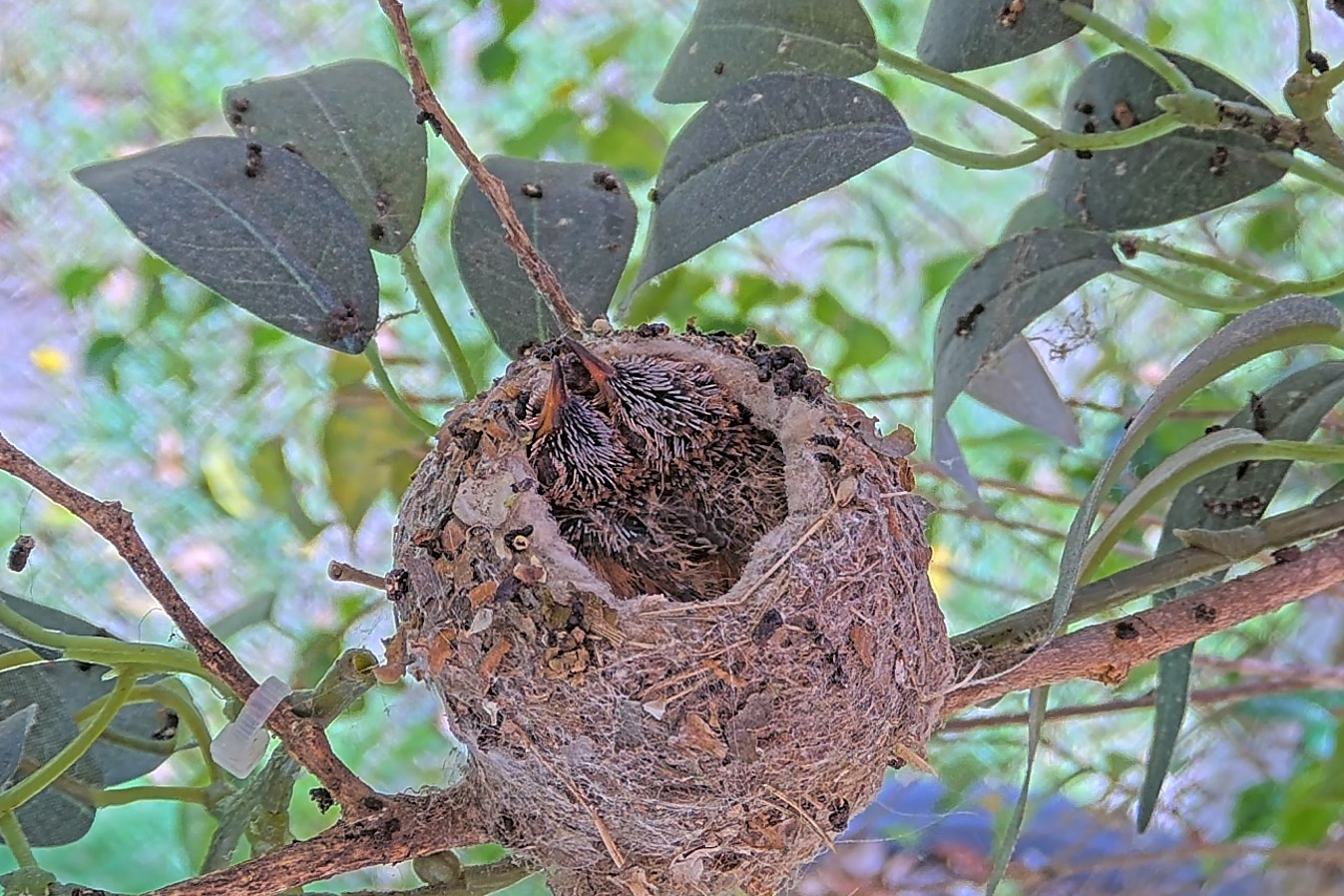
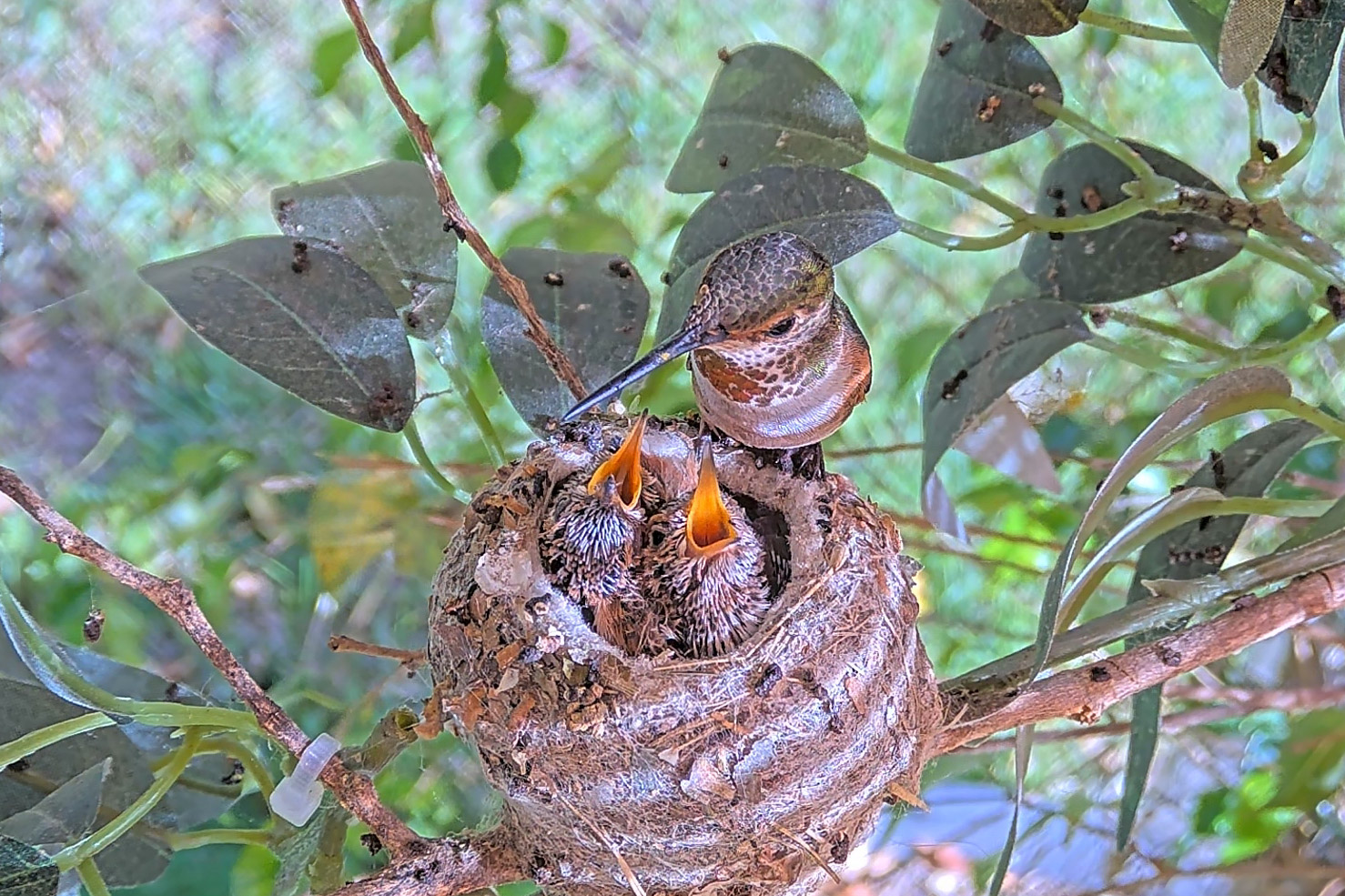
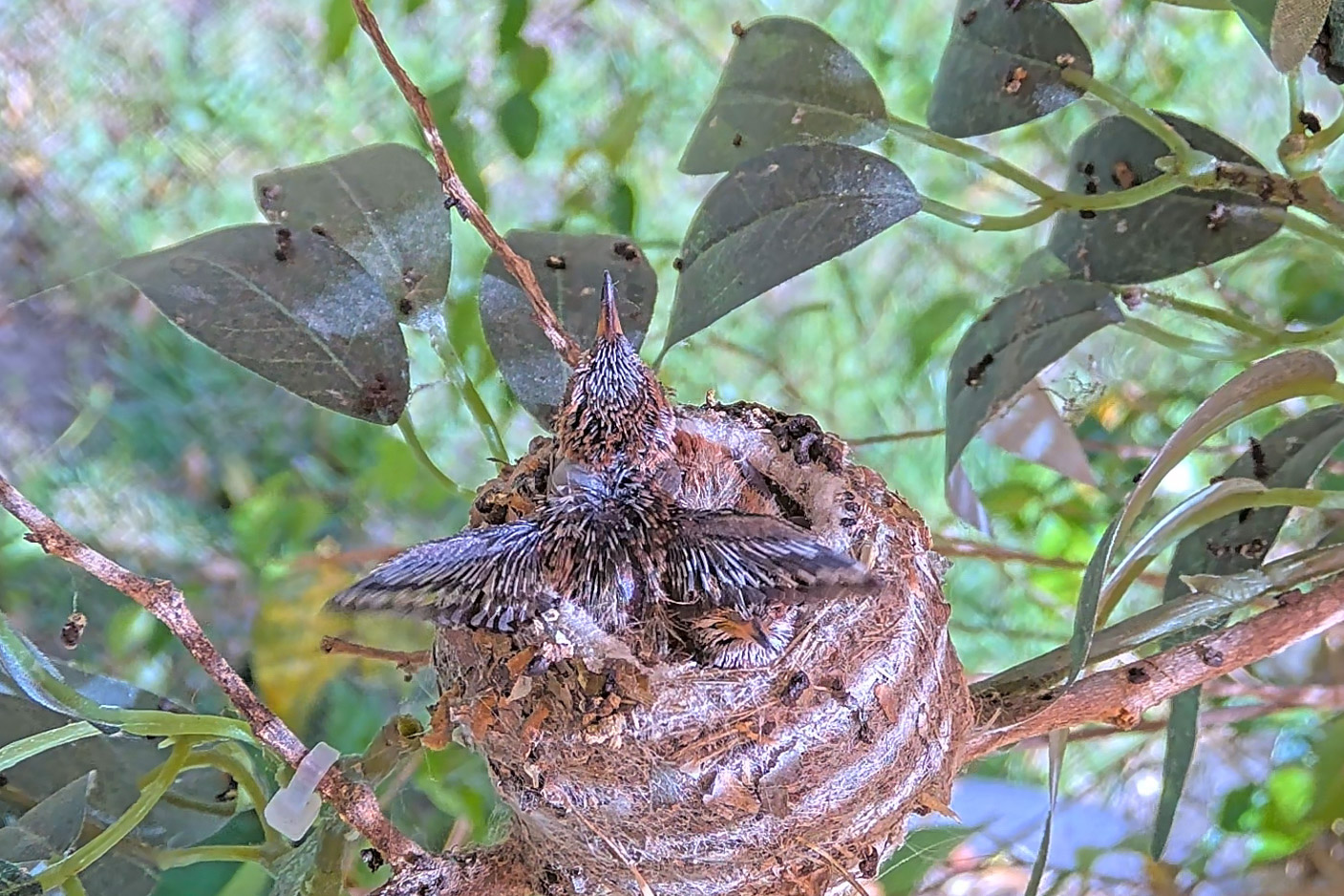
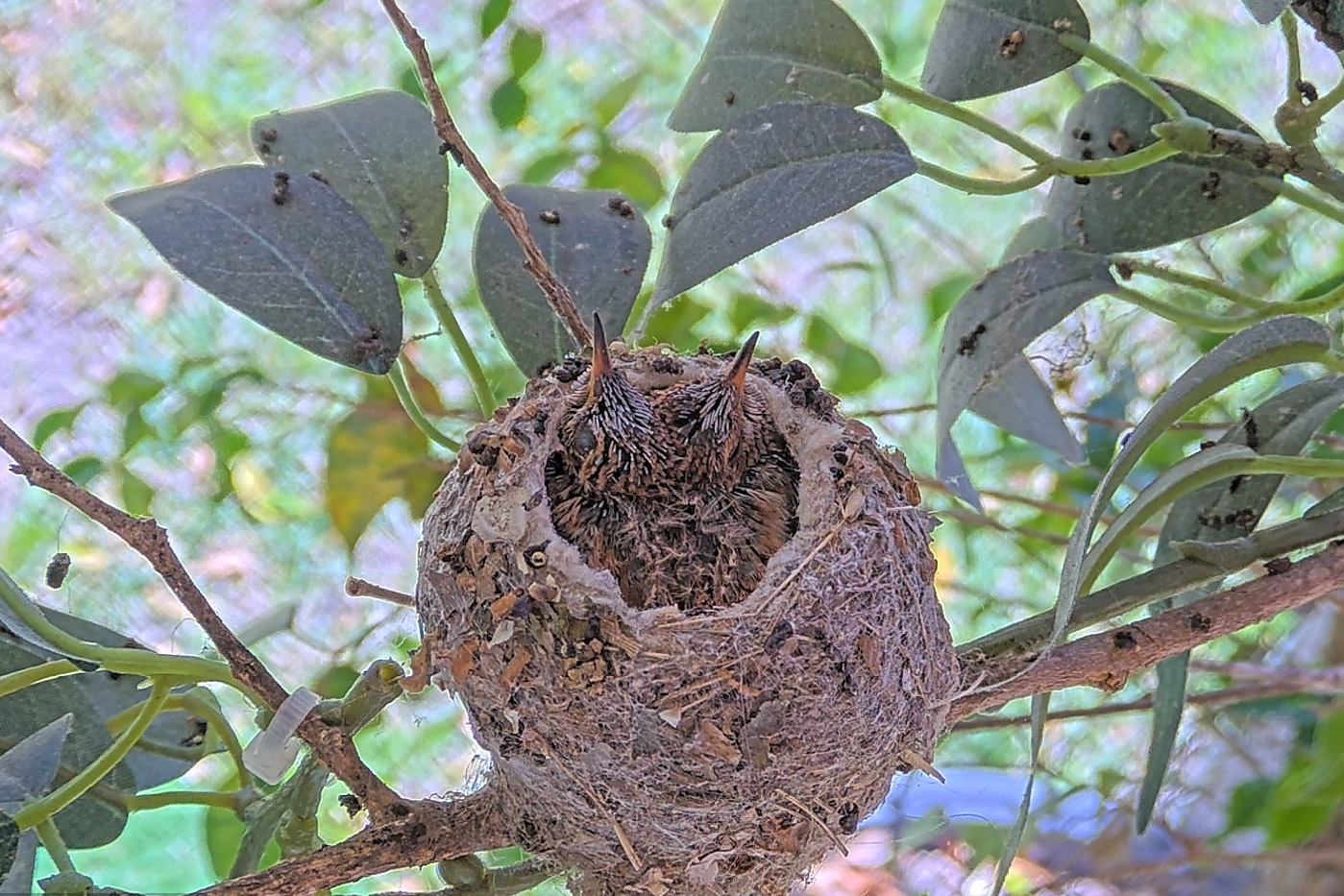
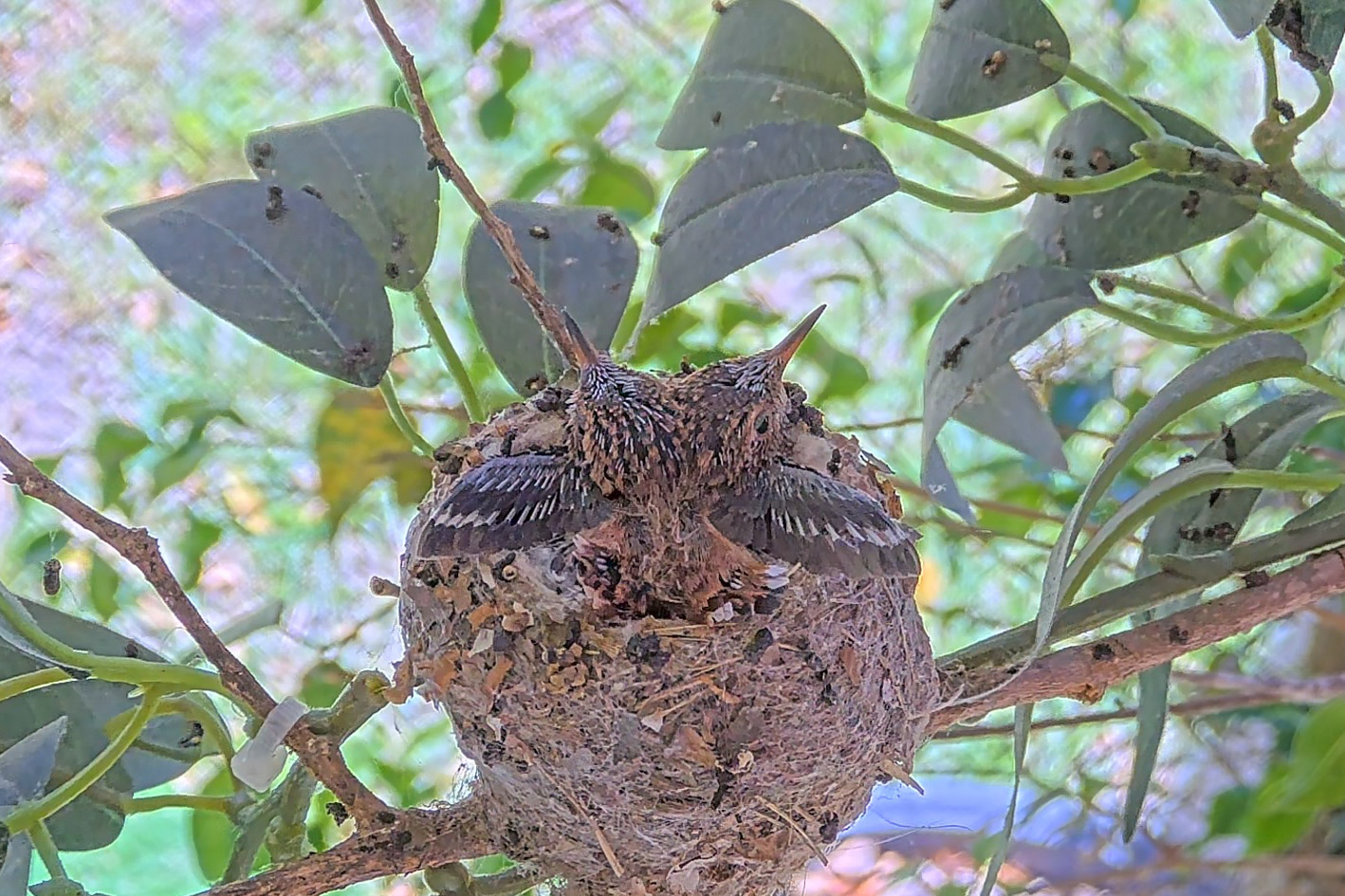
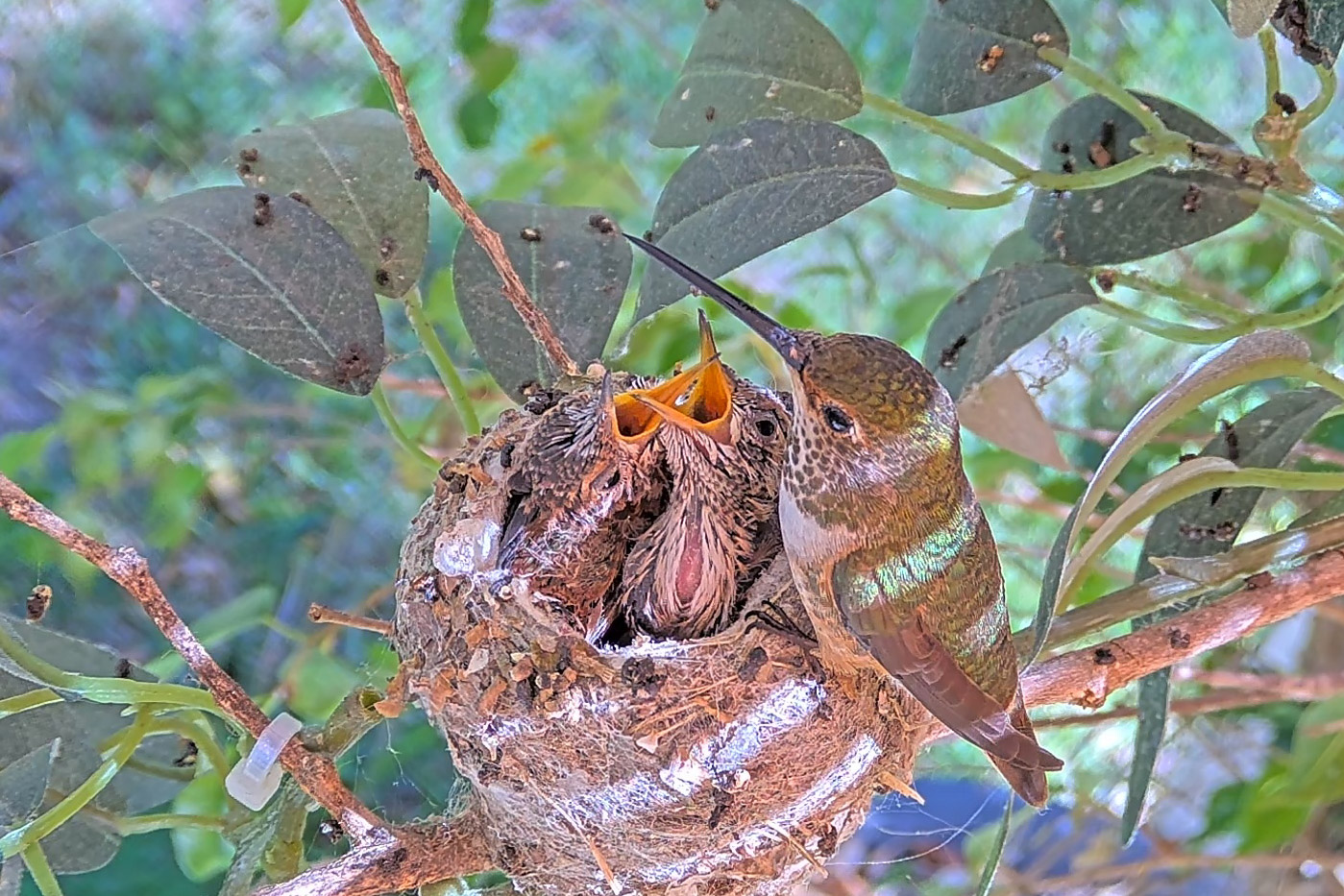
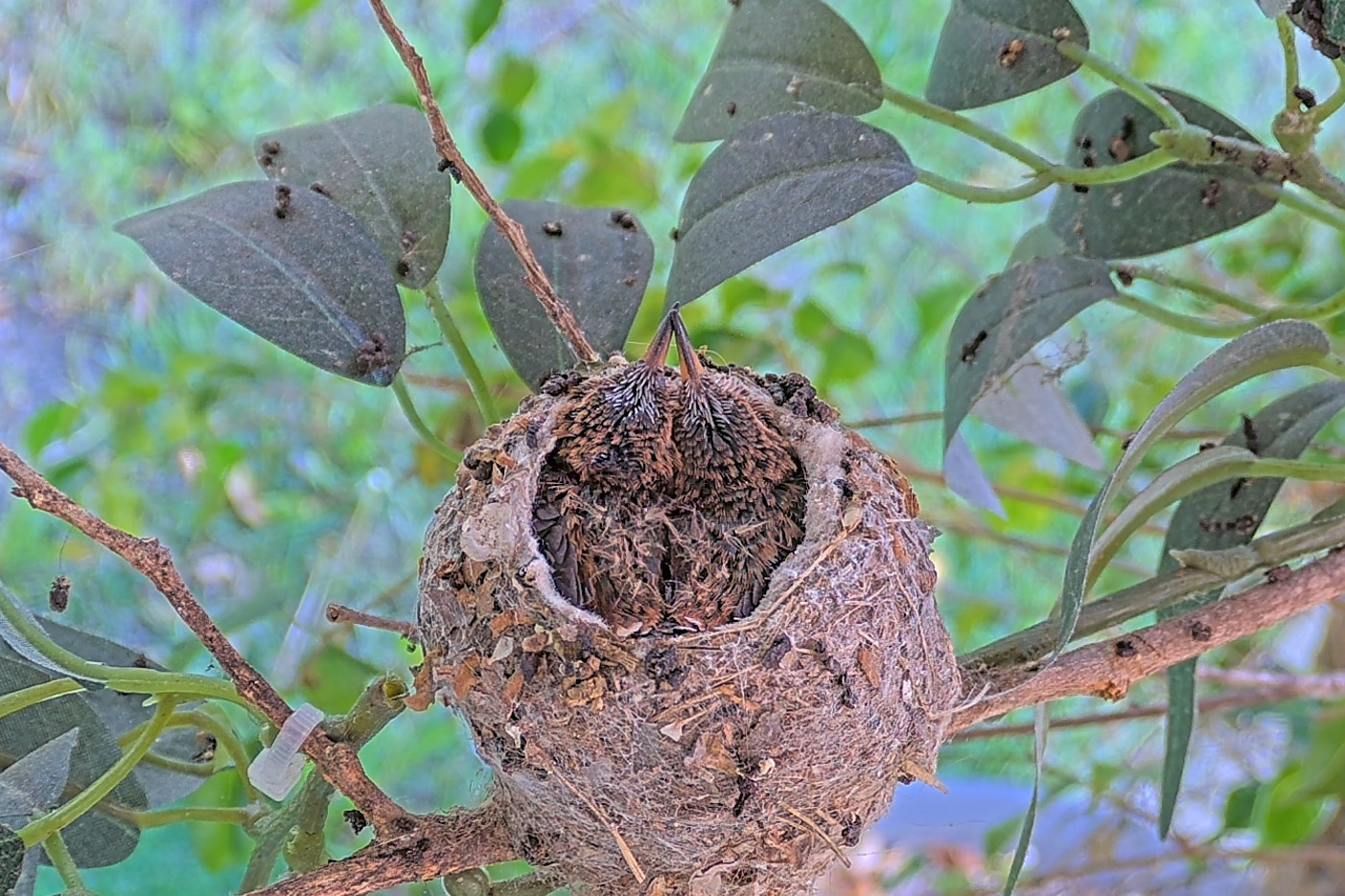
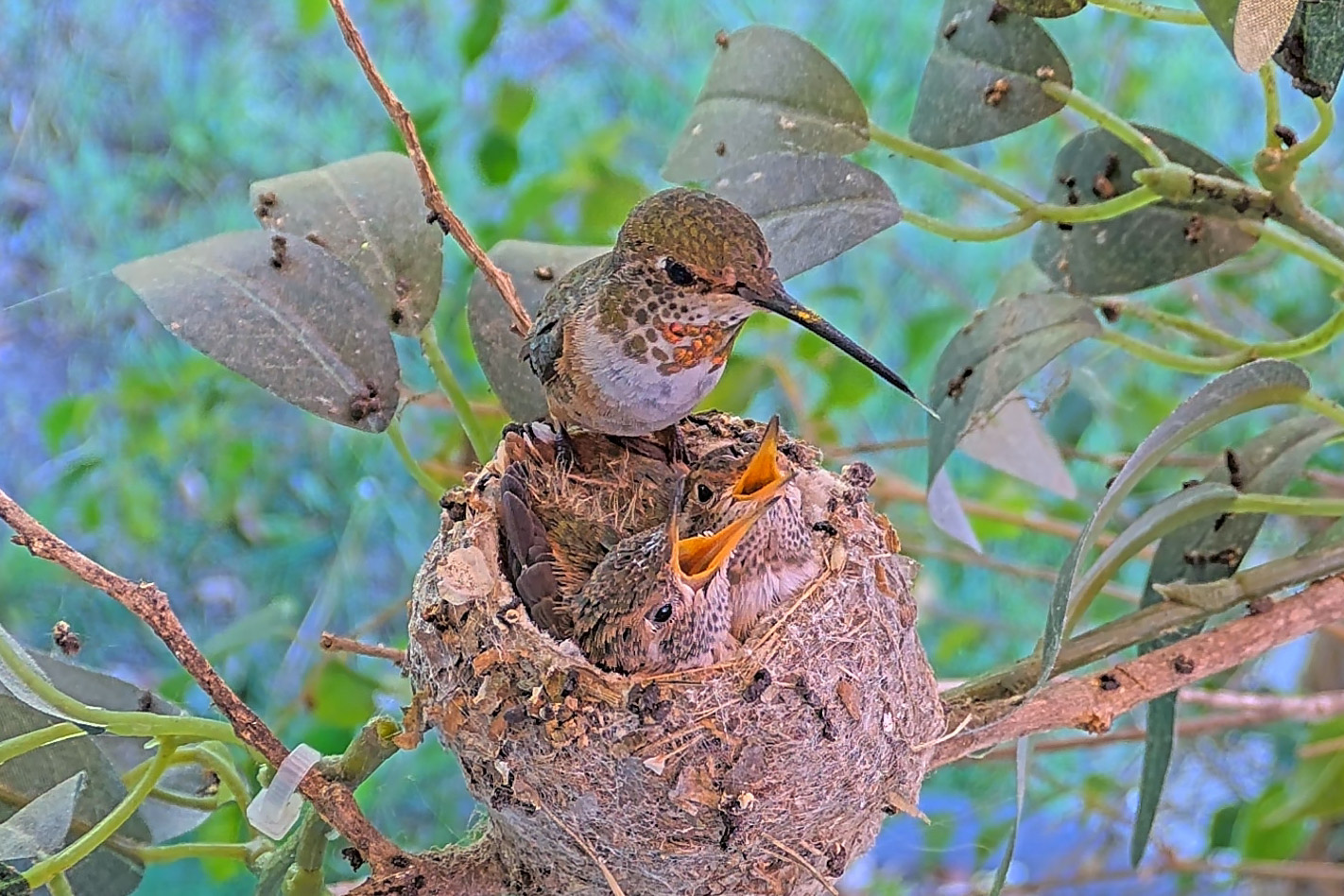
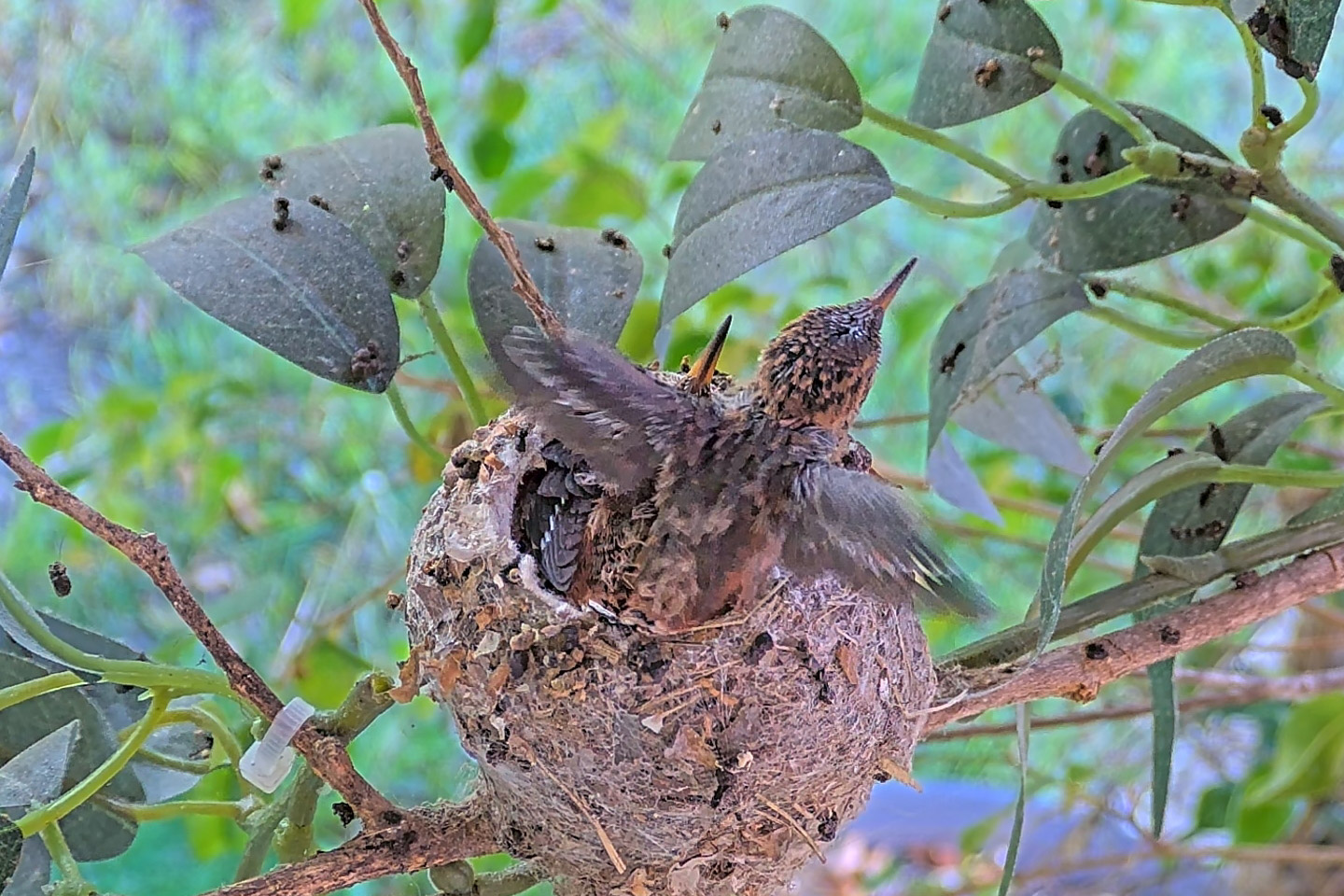
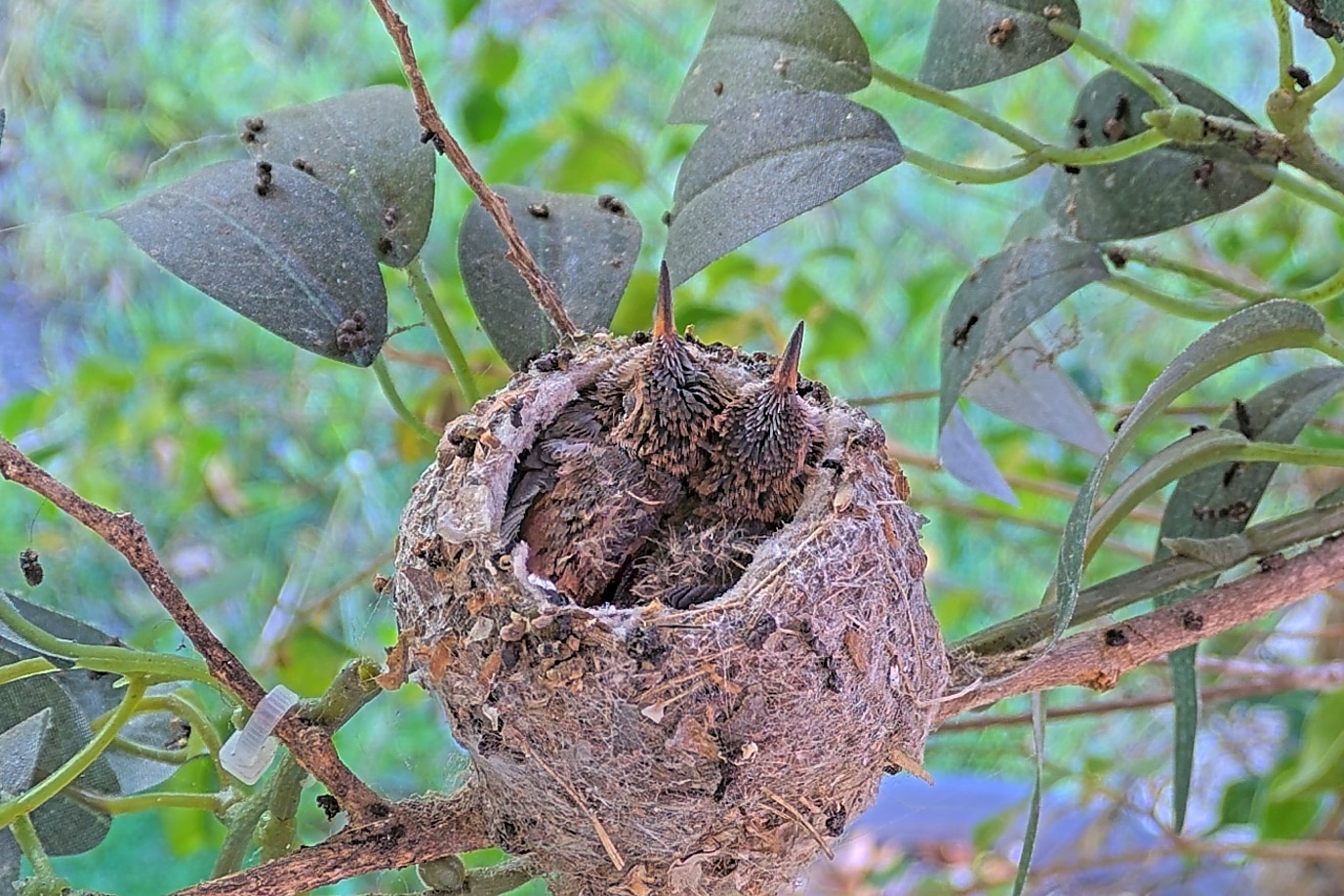
Tulip & Poppy — A Necessary Rescue
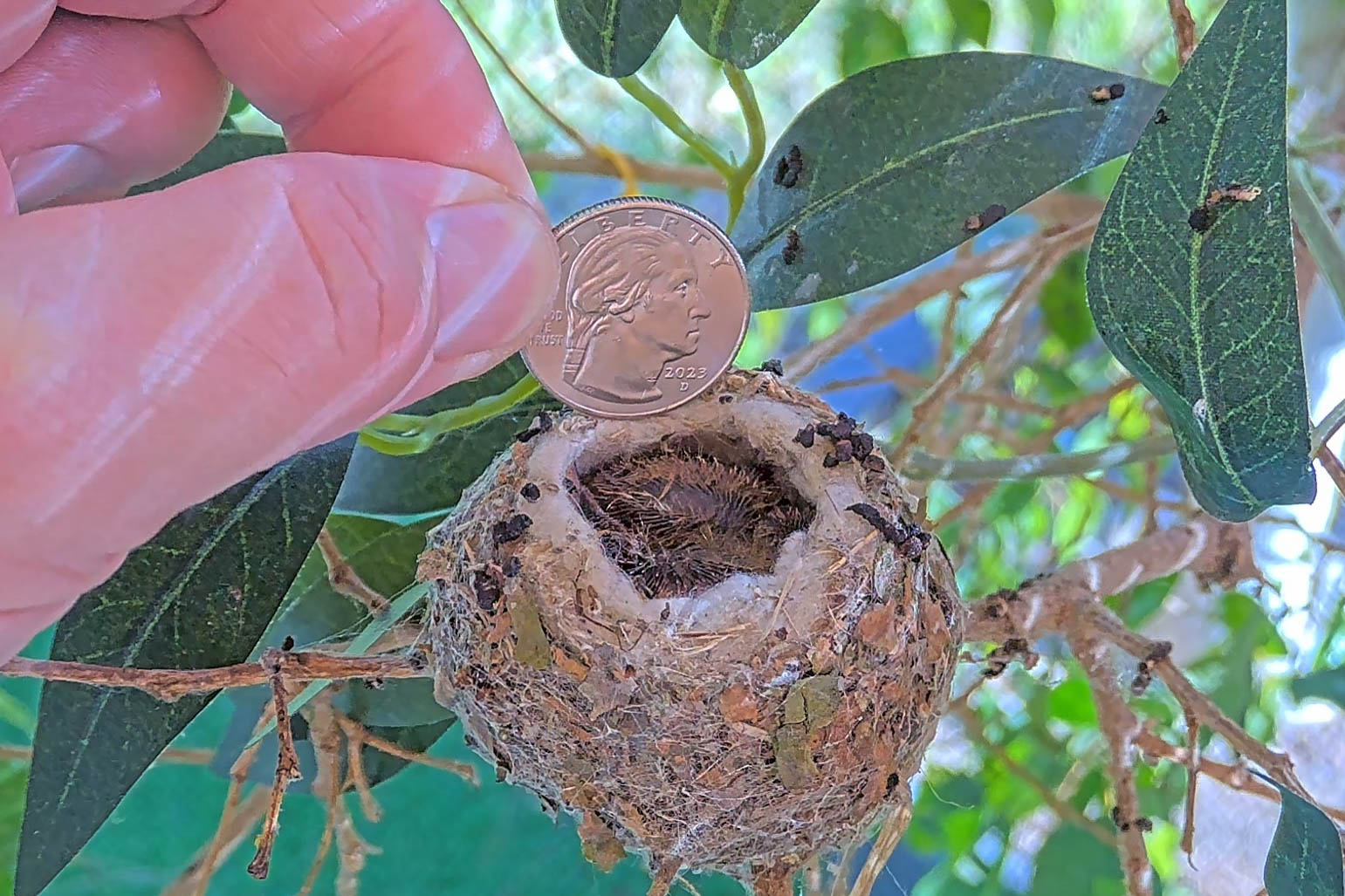
Unfortunately, Tulip and Poppy’s nest became heavily infested with mites. This can be a serious problem, particularly with later clutches when the weather get wamer and surrounding vegetation no longer has water.
Mother hummingbirds can unknowingly pick up mites while gathering polon and carry them back to the nest. Once introduced, the mites multiply quickly and become deeply embedded throughout the nesting material.
For tiny hummingbird chicks, a severe mite infestation can become life-threatening fast. The mites feed on the chicks and can weaken them rapidly. At this stage, simply removing a few visible mites isn't enough—the infestation can be throughout the entire nest.
Once we discovered how serious the infestation had become, there was really only one option: Tulip and Poppy needed to be rescued.
The chicks were carefully removed and taken to an experienced hummingbird rehabilitator, where they could be treated, kept safe, and properly fed as they continued to grow. Once they were healthy, strong, and able to survive independently, they could be released back into the wild where they belong. and the nest was removed.
One of the most difficult parts of intervening is watching Mom afterward. She doesn't understand why her chicks are suddenly gone and may return to the nest repeatedly for several days searching for them.
It's heartbreaking to watch, but sometimes intervention is necessary. In a severe mite infestation, leaving the chicks in the nest mean they have very little chance of survival.
Rescuing them gives Tulip and Poppy something they might not otherwise have had—a chance to grow up, spread their wings, and return to the wild.
Thank you so much for your support. Everything we do here is made possible by the dedication of our volunteers and by your generous contributions. Your support helps offset ongoing expenses such as servers, cameras, network equipment, software, internet services, website, and more. Your continued generosity and encouragement truly mean the world to us. This is, without question, a labor of love for everyone involved. ❤️
Venmo @alyssasnaturesanctuary
Also check out our Online Store: https://alyssasnaturesanctuary.org/shop
And here is a link to things around the Sanctuary: https://amzn.to/4pTJ7ay
Help fund us for another year: https://gofund.me/b3fec72e1