
How a Hummingbird Chick Cracks the Egg
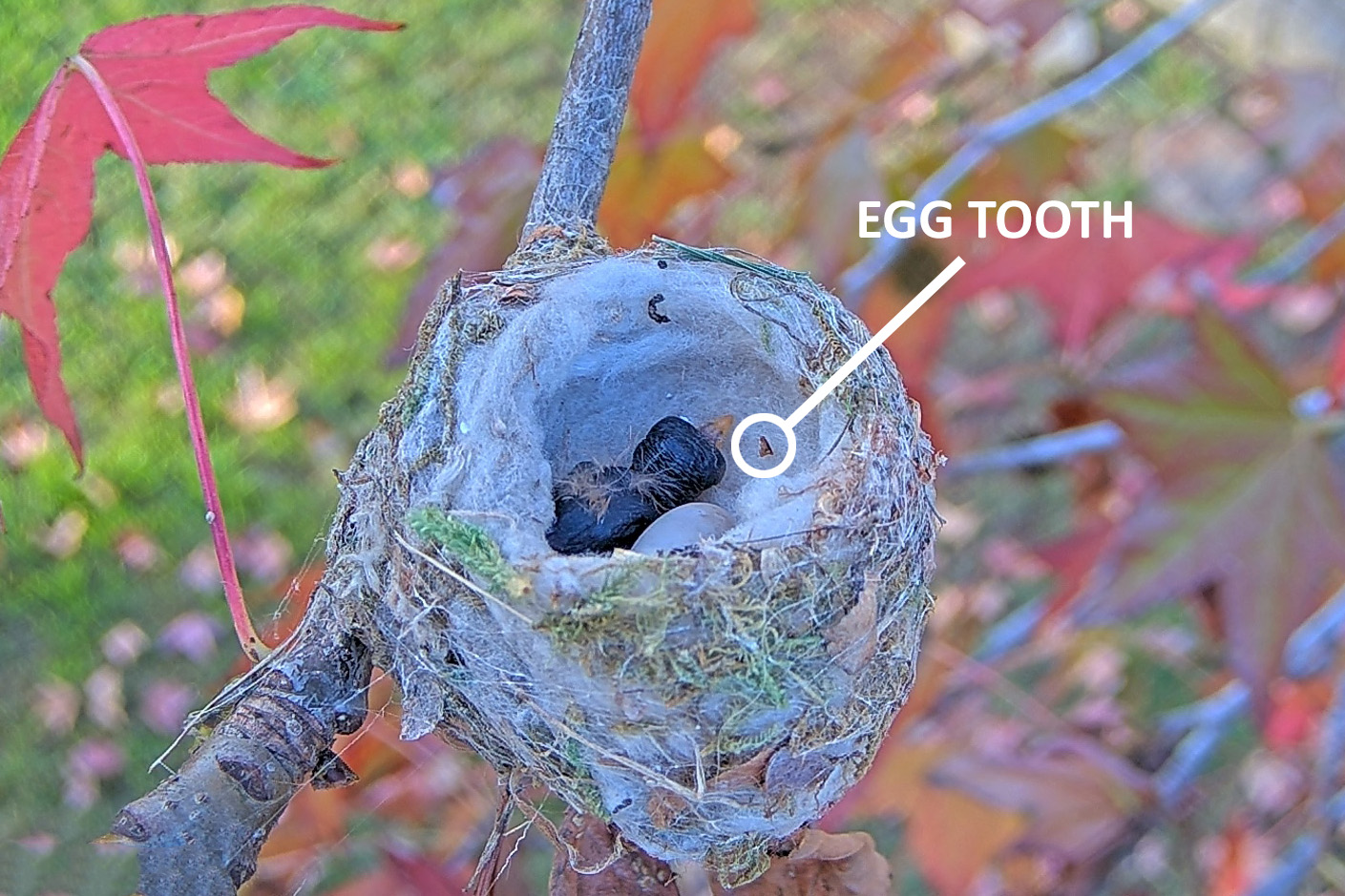
1. All baby birds use an egg tooth, a temporary calcium spike on their beak, to chip through the eggshell and hatch, including common ones like chickens, ducks, and eagles, as well as specialized species like woodpeckers (which can have them on both mandibles) and even less common ones like avocets and stilts. This sharp point helps them "pip" the shell, and it falls off or dissolves within days or weeks after hatching.
2. How it Works
• Formation: A hard, calcium-based structure forms on the tip of the upper mandible (and sometimes lower) during the final days of incubation.
• Pipping: The hatchling uses this tooth to press against the inside of the shell, creating a small hole (the "pip").
• Hatching: The bird continues to chip and rotate, eventually cracking the shell open.
• Disappearance: The egg tooth falls off or is absorbed shortly after hatching.
3. Hummingbirds do have a temporary "egg tooth," a small, sharp point on their beak used to chip their way out of the eggshell during hatching, though some sources initially suggest they don't, they actually do, using it to "pip" the shell, making it easier to break open than a chicken's hard shell, with the tiny tooth usually gone soon after birth. How it works:
• Pipping: The baby hummingbird uses this small, keratin-based projection to make small holes or "pips" in the eggshell.
• Shell Splitting: It then works to cut the shell, eventually causing it to split, allowing the chick to emerge.
• Quick Process: Hatching for a hummingbird can be quite fast, sometimes happening in under an hour.
• Temporary Feature: Like other birds, it's a temporary structure that falls off after hatching, as hummingbirds don't have true teeth.
4. Why it's sometimes confusing:
• Hummingbird eggs are very thin and delicate, which might lead some to think they don't need an egg tooth.
• The actual hatching process relies on the chick's ability to poke and push, and while they do use the egg tooth, the shell is also easy to break.