
What happens if a hummingbird egg doesn't hatch?
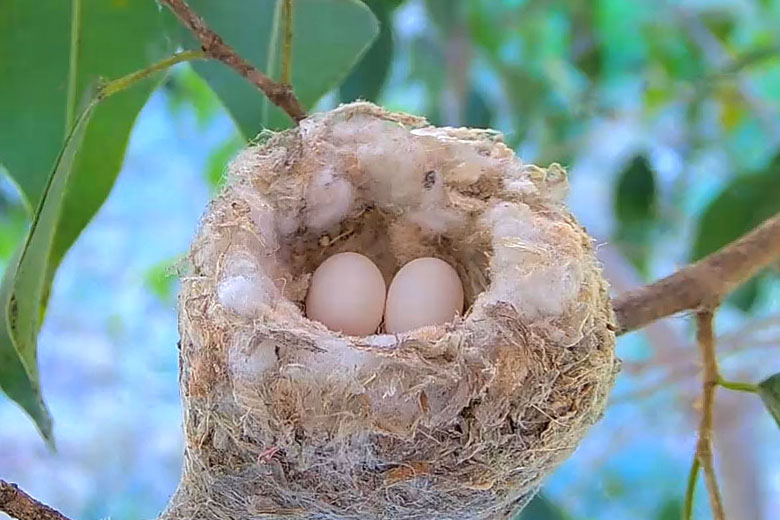
Quick answers
Hummingbird eggs typically hatch within 14–16 days. If an egg has not hatched after approximately 20 days, it is unlikely to hatch due to one of the following reasons:
- The embryo did not survive
- The egg was infertile
- Incubation conditions were not suitable
When an egg does not hatch, the mother hummingbird will eventually abandon the nest and the egg. She is unable to remove the egg and will not continue incubating one that will never hatch. Over time, the abandoned egg may be taken by predators or naturally decompose.
Normal hummingbird egg development
Hummingbird eggs are extremely small, averaging about 0.5 inches in length and weighing less than one gram. Despite their size, they follow the same general stages of development as other bird eggs:
Fertilization
The egg is fertilized by the male, usually within a day of being laid, allowing embryonic development to begin.
Early development
During the first week, the embryo forms basic organs and body structures.
Middle development
In the second week, the chick develops feathers, a beak, claws, and a skeletal structure. It grows rapidly and begins to occupy more space within the egg.
Late development
In the final 2–3 days, the chick moves into hatching position, absorbs the yolk sac into its abdomen for post-hatch nutrition, and pips into the air cell at the large end of the egg.
Hatching
Using its egg tooth, the chick pips around the circumference of the air cell until the shell breaks away, allowing it to emerge into the nest. This process typically takes 12–24 hours from start to finish.
For hummingbirds, the normal incubation period is 14–16 days after the egg is laid. Chicks that begin pipping unusually early (around 13 days) or very late (after 18 days) are less likely to hatch successfully.
Causes if hummingbird eggs don’t hatch
If a hummingbird egg shows no signs of pipping or hatching after 20 days, it is unlikely to hatch. The most common reasons are outlined below.
Embryo death during development
The developing chick may have died at some point during incubation due to one or more of the following factors:
- The egg was handled, shaken, or rotated improperly
- Temperatures were too high or too low for extended periods
- The nest was disturbed or the eggs were dislodged
- Bacterial or fungal infection developed inside the egg
- The shell was cracked or otherwise damaged
- The mother abandoned the nest for several consecutive days
If the embryo dies during the first week, there may be no visible signs. Deaths later in development may be indicated by dark areas or visible blood vessels inside the egg.
Egg infertility
An estimated one in five hummingbird eggs may be infertile. In these cases, the female lays an egg that was never fertilized by a male, so embryonic development never begins.
Infertile eggs typically show little or no vein development. Over time, they may dimple inward as gases escape, but no chick forms inside.
Improper incubation conditions
Even a fertile egg may fail to hatch if incubation conditions are not suitable, including:
- Inconsistent or insufficient incubation by mom
- Incorrect humidity or ventilation in an artificial incubator
- Temperatures consistently outside the ideal range of 99–104°F (37–40°C)
If an egg does not hatch within about 20 days, the mother may abandon it, signaling that development has failed. Disturbing the nest or removing the egg prematurely can also lead to hatching failure.
What happens to unhatched hummingbird eggs?
Hummingbird mothers do not continue incubating eggs indefinitely. If an egg does not hatch within the normal 14–16 day period, the following outcomes are typical:
Nest abandonment
After three to four weeks with no hatching, the mother hummingbird recognizes that the egg will not hatch and abandons the nest. She cannot remove the egg and must move on to attempt another clutch. The unhatched egg is left behind without further care.
Predation
Once the mother leaves, the egg becomes vulnerable to predators such as jays, crows, squirrels, raccoons, and snakes. Predation helps recycle nutrients back into the ecosystem.
Natural decomposition
If predators do not find the nest, the egg may slowly decompose. The shell can crack, collapse inward, and weather away over time, especially when exposed to moisture and sunlight. Eventually, only shell fragments or stains on the nest remain, and the nutrients are absorbed into the surrounding environment.
When to assist an unhatched hummingbird egg
In most situations, it is best not to interfere with a hummingbird nest and to allow natural processes to occur. However, in rare circumstances, intervention may be appropriate if specific warning signs are present:
Mom killed or missing
If the mother hummingbird tending the nest are predated or disappear entirely, the eggs have little chance of hatching without continuous incubation. In this emergency situation, attempting artificial incubation may be justified.
Eggs displaced from the nest
Strong winds or other disturbances can occasionally knock eggs out of the nest before hatching. If the parents do not retrieve them promptly, the eggs are unlikely to survive. Carefully returning displaced eggs to the nest may restore their chance of hatching.
Egg pipped but chick unable to emerge
In rare cases, a chick may begin pipping but fail to fully emerge after one to two days. At this critical stage, very cautious assistance—such as gently removing additional shell—may help the chick survive.
Mom abandons a pipped egg
Occasionally, mom may abandon the nest after an egg has already pipped, leaving the chick unable to complete hatching on its own. If the parents are clearly not returning, carefully opening the shell further may provide the chick’s only chance of survival.
Intervention during hatching should always be approached with extreme caution, as improper assistance can cause serious harm. Whenever possible, allowing the chick to hatch naturally remains the safest and preferred option.
Summary
Hummingbird eggs that do not hatch within 20 days have a very low chance of hatching. In most cases, the embryo died during development, the egg was infertile, or incubation conditions were unsuitable. After three to four weeks, the mother typically abandons the unhatched egg, which may then be eaten by predators, decompose naturally, or, in rare cases, be collected by humans. Intervention is only appropriate in specific emergency situations; otherwise, it is best to allow natural processes to take their course.